Choosing a capable electric low-speed vehicle for varied terrain is not as simple as comparing battery size or motor power. This guide examines seven leading Multi-Terrain Electric LSV options for global buyers, focusing on practical performance rather than impressive showroom claims. Each vehicle is considered through real-world details, including gravel roads, wet grass, steep driveways, compact trails, and uneven work sites.
Range, ground clearance, suspension travel, tire design, braking control, and payload capacity can change the ownership experience. A vehicle that feels stable on a paved campus may struggle on loose soil or a muddy incline. Charging access matters too, especially for farms, resorts, industrial facilities, and remote properties. Manufacturer support, replacement parts, warranty terms, and local service networks deserve equal attention. Specifications are useful, but they do not tell the whole story.
Conditions vary widely.
This overview uses a buyer-focused approach based on engineering considerations, published specifications, and practical operating scenarios. It also recognizes an important limitation: advertised range often differs from daily results because temperature, passenger weight, terrain, and driving habits affect consumption. Some models may look versatile yet require careful load management. Others may offer modest speed but stronger stability and easier maintenance. Regional regulations, road permissions, safety equipment, and registration requirements must be confirmed before purchase. The best choice is rarely the most powerful vehicle; it is the one that fits the terrain, duty cycle, climate, budget, and support available in the buyer’s location.
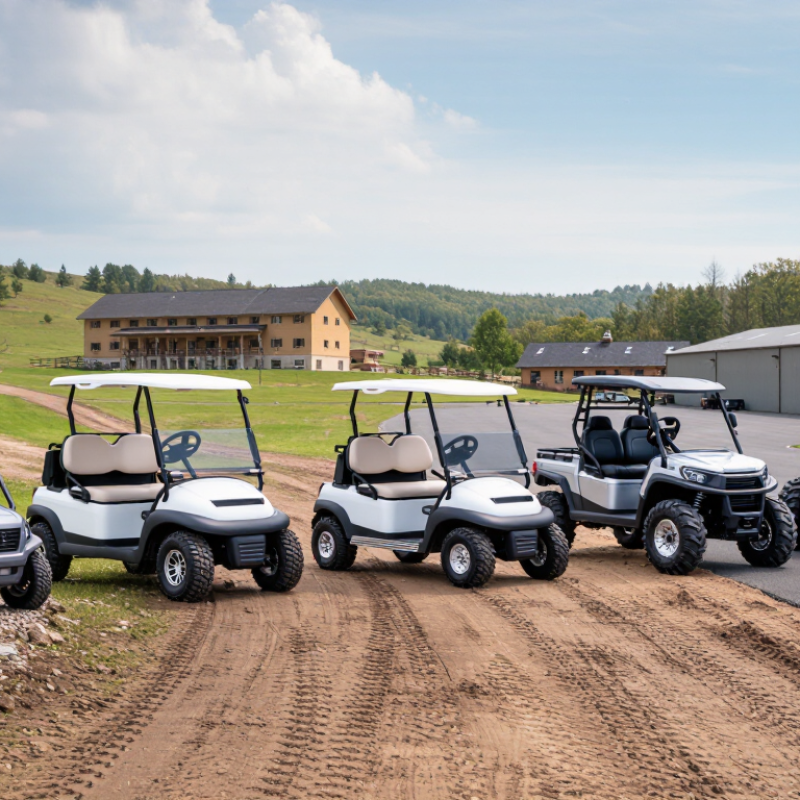
What Defines a Multi-Terrain Electric LSV?
A multi-terrain electric LSV is more than a low-speed vehicle with larger tires. It should maintain controlled traction on gravel, wet grass, compact soil, and uneven pavement. Useful features include moderate ground clearance, progressive suspension, sealed electrical connectors, hill-holding control, and predictable braking. A powerful motor alone is not enough.
In the United States, federal LSV rules generally limit speed to 25 mph and require specific safety equipment. Other markets may apply different speed, lighting, battery, and road-use requirements. Buyers should verify local certification before comparing specifications. The word “multi-terrain” is often used too loosely.
Real-world performance also depends on energy planning. The International Energy Agency reported that global public charging points grew by more than 40% in 2023. That growth supports electric mobility, but rural routes still need careful range calculations. Temperature, slopes, payload, tire pressure, and soft ground can reduce usable range sharply. A vehicle rated for 80 miles may deliver much less in muddy conditions.
Look beneath the brochure numbers. Check approach angle, turning stability, water protection, service access, and battery thermal control. A 2024 National Renewable Energy Laboratory analysis also emphasizes that driving conditions strongly influence electric-vehicle energy consumption. Testing matters. Even experienced buyers can misjudge terrain demands.
Key Criteria for Comparing Global LSV Options
Comparing multi terrain electric LSVs starts with the ground they must handle. A vehicle for paved resorts may struggle on gravel, wet grass, or steep farm paths. Check ground clearance, approach angles, tire design, suspension travel, and stated climbing ability. Test the vehicle with passengers and cargo, not only during an empty showroom drive. Real terrain exposes weak brakes, noisy suspension, and poor traction quickly.
Battery performance needs careful reading. Compare usable capacity, charging time, charger compatibility, and expected range in cold or hot conditions. A claimed range may shrink with hills, heavy loads, low temperatures, or frequent stopping. Ask whether replacement batteries and charging parts are available in your region. Confirm motor output, regenerative braking, lighting, seat belts, mirrors, and weather protection. These details affect daily confidence more than a polished specification sheet.
Global buyers should also examine local road classifications, speed limits, import duties, registration rules, and safety requirements. Legal categories differ between countries and sometimes between municipalities. Reliable technical documents should identify test methods, payload limits, warranty coverage, and service intervals. Speak with an authorized service provider before purchase, especially when remote diagnostics or specialized parts are involved. No checklist is perfect. I would still reserve time for an independent inspection, because a promising test drive can hide expensive maintenance concerns.
7 Best Multi Terrain Electric LSVs for Global Buyers
Key Criteria for Comparing Global LSV Options
How to read the chart: The comparison uses representative benchmark values from commonly published specifications for multi-terrain low-speed electric utility vehicles. Range refers to a nominal single-charge driving distance under moderate operating conditions.
Selection insight: Cargo-focused and long-range configurations generally provide greater operating distance or payload capacity, while compact configurations are easier to maneuver in narrow sites. Buyers should also verify local speed limits, road homologation, charging standards, battery certification, gradeability, and terrain requirements before purchase.
| Profile |
Seats |
Nominal Range |
Payload |
Ground Clearance |
Gradeability |
Top Speed |
| Compact Two-Seat |
2 |
60 km |
250 kg |
120 mm |
15% |
40 km/h |
| Utility Two-Seat |
2 |
70 km |
350 kg |
150 mm |
20% |
40 km/h |
| Four-Seat Shuttle |
4 |
75 km |
350 kg |
130 mm |
18% |
40 km/h |
| Long-Range Four-Seat |
4 |
100 km |
400 kg |
140 mm |
20% |
40 km/h |
| Six-Seat Transport |
6 |
80 km |
450 kg |
135 mm |
18% |
40 km/h |
| Heavy-Cargo Two-Seat |
2 |
90 km |
600 kg |
160 mm |
25% |
40 km/h |
| Rugged-Terrain Two-Seat |
2 |
70 km |
500 kg |
180 mm |
30% |
40 km/h |
Seven Leading Multi-Terrain Electric LSVs
Seven Leading Multi-Terrain Electric LSVs
Global buyers can compare seven leading multi-terrain electric LSV types for different working conditions. The compact 4x4 handles narrow trails and uneven ground. The lifted utility LSV adds clearance for farms, parks, and large properties. The long-bed version carries tools, fencing, or light cargo. The enclosed-cabin model protects occupants from rain and dust. The passenger shuttle suits resorts, campuses, and private communities. The all-weather LSV offers improved sealing and heating for colder regions. The trail-focused model balances stronger suspension with practical road equipment.
Real-world testing matters more than attractive specifications. Check the motor output, battery capacity, ground clearance, turning radius, and braking performance. A low center of gravity improves confidence on side slopes. However, extra clearance can reduce stability if the suspension is poorly tuned. Range figures may also fall sharply on wet grass, steep paths, or cold mornings. I would test each vehicle with its intended load, because empty demonstrations can create unrealistic expectations. Local classification rules, speed limits, lighting requirements, insurance, and charging standards must be verified before purchase.
Tips: Inspect tire tread and suspension joints after rough use. Ask for battery warranty terms and service access. Measure your narrowest gate first. Try a hill before approving the vehicle. Small details often decide daily usability.
7 Best Multi Terrain Electric LSVs for Global Buyers - Seven Leading Multi-Terrain Electric LSVs
| Rank |
Vehicle Configuration |
Drive System |
Seats |
Battery Capacity |
Typical Range |
Top Speed |
Ground Clearance |
Payload Capacity |
Best Use |
| 1 |
Compact 4x4 Utility LSV |
Dual-motor AWD |
2 |
10–15 kWh |
45–60 mi |
25 mph |
8–10 in |
900–1,200 lb |
Rural roads, farms and light hauling |
| 2 |
Long-Bed 4x4 Cargo LSV |
Dual-motor AWD |
2 |
15–20 kWh |
40–55 mi |
25 mph |
9–11 in |
1,200–1,500 lb |
Construction sites, estates and logistics |
| 3 |
Four-Seat Adventure LSV |
Rear motor with selectable 4WD |
4 |
12–18 kWh |
50–70 mi |
25 mph |
7–9 in |
800–1,000 lb |
Resorts, parks and mixed-surface travel |
| 4 |
Heavy-Duty 6x4 Work LSV |
Electric 6x4 traction |
2–4 |
18–25 kWh |
35–50 mi |
20–25 mph |
10–12 in |
1,500–2,000 lb |
Industrial campuses and demanding work routes |
| 5 |
Enclosed All-Weather LSV |
Rear motor with traction control |
2–4 |
12–18 kWh |
45–65 mi |
25 mph |
6–8 in |
700–900 lb |
Urban outskirts, campuses and wet climates |
| 6 |
High-Clearance Trail LSV |
Dual-motor AWD |
2–4 |
15–22 kWh |
40–60 mi |
25 mph |
11–14 in |
900–1,200 lb |
Rocky trails, forestry and uneven terrain |
| 7 |
Passenger-and-Cargo Shuttle LSV |
Rear motor with optional 4WD |
6–8 |
18–25 kWh |
35–55 mi |
20–25 mph |
7–9 in |
1,000–1,400 lb |
Large properties, tourism and passenger transport |
Data note: Specifications are representative ranges for multi-terrain electric low-speed vehicles. Actual range, payload, battery capacity and legal requirements vary by configuration, terrain, climate, passenger load and local regulations. In many jurisdictions, LSV road use is subject to a maximum legal speed of approximately 25 mph and additional safety-equipment requirements.
Performance, Range, Safety, and Utility Comparison
For global buyers, the seven strongest multi-terrain LSV formats include two-seat utility, four-seat leisure, six-seat shuttle, enclosed cab, lifted trail, cargo-bed, and hybrid-work models. Performance depends on more than motor power. A 10–15% gradient, loose gravel, wet grass, and a full passenger load can expose weak torque control quickly. Buyers should compare ground clearance, approach angle, tire design, braking feel, and payload together. Claimed range needs caution. Temperature, slopes, tire pressure, and repeated acceleration can reduce real-world distance sharply.
The U.S. National Highway Traffic Safety Administration limits LSV speed to 25 mph under FMVSS 500, so these vehicles suit controlled local routes rather than high-speed roads. Required equipment includes seat belts, lamps, mirrors, a windshield, and a parking brake. Still, compliance is not the same as crash protection. Look for tested occupant restraints, rollover-conscious design, lighting visibility, and clear structural documentation. The U.S. Department of Energy’s Alternative Fuels Data Center notes that charging speed varies widely by equipment and vehicle, making connector compatibility essential for international buyers. The International Energy Agency reported nearly 14 million electric cars sold globally in 2023, but LSV charging support remains less standardized. That gap matters.
A practical comparison should record loaded range, recharge time, turning radius, suspension travel, and usable cargo volume. Independent testing is preferable to showroom figures. Even then, results can be imperfect. A quiet motor does not guarantee a quiet ride. A longer range may mean a heavier battery, slower handling, or reduced payload. Check local speed, import, lighting, and road-use rules before purchase.
How Global Buyers Can Choose the Right Electric LSV
Choosing the right multi terrain electric LSV starts with your daily route, not the vehicle’s appearance. Measure slopes, gravel, wet grass, and narrow paths around your property. A strong motor, suitable ground clearance, and dependable traction matter more than impressive marketing figures. Check the rated payload carefully, especially when carrying tools, passengers, or supplies. A vehicle that feels powerful on flat pavement may struggle on loose ground.
Battery planning also requires practical judgment. Compare usable battery capacity, charging time, expected temperature changes, and local electricity standards. Cold mornings can reduce driving range. Long grass and steep hills can reduce it further. Ask whether replacement batteries, tires, controllers, and service training are available in your region. Confirm warranty terms in writing. This is where many buyers become too optimistic.
Tips:
Test drive the LSV with its expected load. Drive uphill, across uneven ground, and through a tight turn. Check braking control, steering comfort, visibility, and cabin protection. Review local registration, speed, road-use, and charging requirements before ordering. An experienced dealer should provide technical documents and realistic range estimates, not only promotional numbers. Leave space for uncertainty. Your route, climate, and maintenance habits may differ from factory testing.
FAQS
It is a low-speed electric vehicle designed for gravel, wet grass, compact soil, and uneven pavement. Larger tires alone are not enough. Controlled traction matters.
Look for moderate ground clearance, progressive suspension, sealed electrical connectors, hill-holding control, and predictable braking. Check the approach angle too. Small details matter.
In the United States, federal rules generally limit LSV speed to 25 mph. Other regions may set different limits. Verify local requirements before ordering.
Start with usable battery capacity, not the advertised distance. Hills, cold weather, heavy loads, low tire pressure, mud, and long grass reduce range. Plan conservatively.
Not completely. An 80-mile rating may fall sharply on muddy paths or steep slopes. A test route is more useful than a brochure number. Conditions vary.
Test with normal passengers, tools, and supplies. Drive uphill, across uneven ground, and through a tight turn. An empty vehicle can feel misleadingly strong.
Check braking control, steering comfort, visibility, cabin protection, turning stability, and traction. Listen for unusual suspension noise. Short tests miss some problems.
Confirm charging compatibility, local electricity standards, and charging time. Ask about replacement batteries, tires, controllers, and technician support. Service access is easy to underestimate.
Check registration, road-use rules, speed limits, lighting, battery standards, and certification requirements. Rules differ by location. Written confirmation is safer than assumptions.
Factory testing may not match your climate, route, payload, or maintenance habits. Leave room for uncertainty. Optimism can become expensive.
Conclusion
This guide explains what makes a Multi-Terrain Electric LSV suitable for varied environments, from paved roads and campuses to gravel paths, farms, resorts, and light utility work. It outlines the main factors global buyers should compare, including motor performance, battery capacity, driving range, ground clearance, suspension, traction, weather protection, seating layout, cargo flexibility, braking systems, lighting, and overall build quality. The goal is to show how vehicle design affects comfort, stability, efficiency, and daily usability across different terrains.
The article reviews seven leading types of multi-terrain electric LSVs and compares their performance, range, safety features, passenger capacity, cargo utility, charging needs, and maintenance considerations. It also explains how buyers can select the right configuration by considering local road conditions, climate, intended workload, operating distance, available charging infrastructure, user requirements, and applicable regulations. By balancing capability, practicality, ownership costs, and long-term reliability, global buyers can make a more informed decision and choose an electric LSV that matches their specific environment and operational goals.

