Electric Vehicle Manufacturing & Global Export  |  OEM · ODM · Dealer Programs
0%

Choosing a reliable AC Electric Motor Golf Cart supplier requires more than comparing prices. Buyers must examine motor efficiency, battery compatibility, controller quality, braking performance, and after-sales support. A polished body is useful. It is not enough.

According to Mark Wagner, former Club Car president and chief executive, “Innovation matters only when it improves the customer’s experience.” This principle fits electric golf carts closely. A dependable supplier should explain measurable benefits, not repeat vague claims about power or range. Ask for motor specifications, climbing capacity, charging time, warranty terms, and independent quality records. If the supplier avoids clear answers, pause before ordering.

China has a broad manufacturing base for AC Electric Motor Golf Cart models. Experienced factories may offer quiet operation, regenerative braking, strong hill performance, and customized seating or cargo layouts. However, quality can vary sharply between suppliers. Some factories prioritize appearance while overlooking wiring protection or controller calibration. That weakness may appear only after months of daily use.

A serious evaluation should include factory communication, sample testing, production inspection, and spare-parts availability. Request videos of carts operating on slopes, uneven paths, and wet surfaces. Check whether the manufacturer records motor temperature and battery performance during testing. Small details reveal process discipline.

There is no perfect supplier.

Even experienced buyers can misjudge long-term support. The best decision balances engineering evidence, practical experience, transparent documentation, and realistic operating needs. This guide examines how to identify a China AC Electric Motor Golf Cart supplier that delivers dependable value, not merely an attractive quotation.
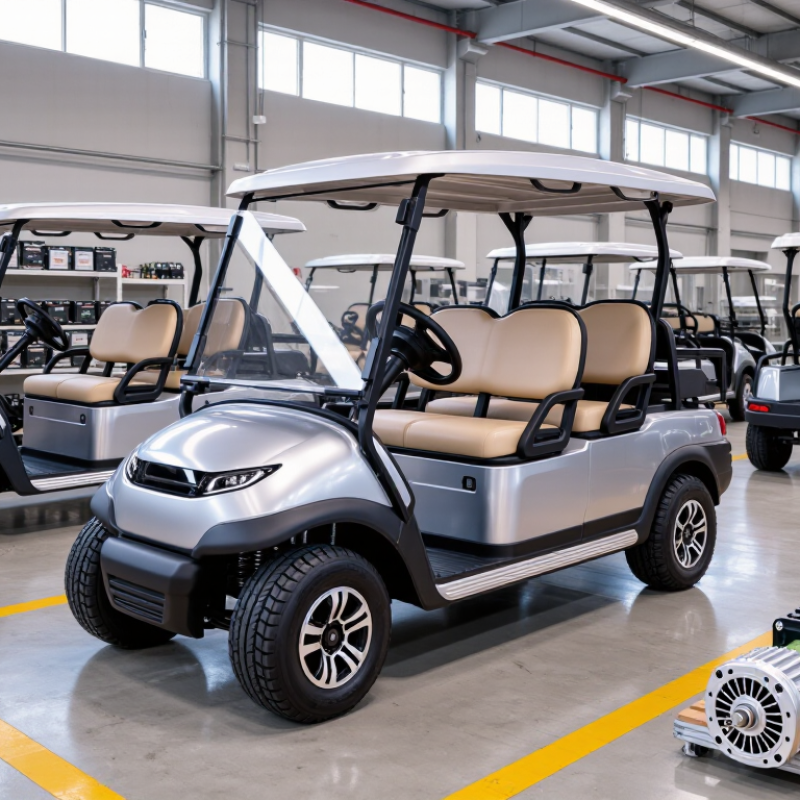
China Best AC Electric Motor Golf Cart Supplier?

What Defines a High-Quality AC Electric Motor Golf Cart Supplier?

A high-quality AC electric motor golf cart supplier is defined by evidence, not polished catalog images. In China’s manufacturing market, buyers should inspect factory capacity, engineering records, and export experience. Ask for motor torque curves, controller specifications, battery matching data, and test results. These documents reveal whether the cart is designed for hills, wet paths, and repeated passenger use. A reliable supplier explains limitations clearly. That honesty matters.

During a practical evaluation, examine the cart at low speed and under load. Listen for uneven motor noise. Check acceleration, braking response, steering play, and suspension rebound. A quality AC system should deliver smooth torque without sudden hesitation. The frame needs consistent welds, protected wiring, and accessible service points. Ask how motors, controllers, chargers, and brake parts are tested before shipment. Samples can look excellent. Production consistency is harder.

Supplier support also defines quality. Confirm spare-part availability, wiring diagrams, fault codes, training, and response times. Request a pre-shipment inspection with photos, serial records, and load-test data. Certifications should match the destination market and the actual configuration, not a generic file. Warranty terms must state exclusions, repair responsibilities, and battery conditions in plain language. No supplier gets every detail right. A thoughtful buyer should record weaknesses instead of ignoring them. Sometimes, a cheaper cart exposes hidden costs through poor range, loose fittings, or delayed technical help.

Key Features of AC Motor Systems in Modern Golf Carts

Modern golf carts increasingly use AC motor systems for smoother performance, stronger hill climbing, and easier control. Unlike basic motor designs, AC systems deliver steady torque from low speeds. This helps a cart move smoothly across ramps, grass, and uneven paths. Regenerative braking can also return limited energy to the battery during deceleration. It is useful, but not magic.

A reliable AC system usually includes a precise controller, thermal protection, and clear diagnostic functions. These features help technicians identify overheating, voltage drops, or sensor faults before serious damage occurs. In practical fleet checks, motor temperature and battery condition often affect performance more than advertised power figures. A sealed motor can resist dust and moisture, but regular inspection still matters. No system is perfect. Poor wiring, weak connectors, or incorrect battery matching can reduce efficiency quickly.

Tips: Check the controller’s current rating, cooling design, and service access before choosing a supplier. Ask for test data under realistic loads, including slopes and repeated stops. Confirm that replacement parts and technical support are available. A capable supplier should explain limitations honestly, not only highlight speed or range. Ask about warranty terms, installation guidance, and protection against overheating. Small details matter.

Key Features of AC Motor Systems in Modern Golf Carts

AC drive systems are widely used in modern golf carts because they provide efficient variable-speed control, strong low-speed torque, and regenerative braking. The chart presents representative motor-efficiency levels under common operating conditions.

How to Evaluate Golf Cart Manufacturers and Product Quality

China Best AC Electric Motor Golf Cart Supplier?

Choosing an AC electric motor golf cart supplier requires more than comparing online prices. A reliable manufacturer should explain motor torque, controller settings, battery options, and charging performance clearly. Ask for test records from a real production unit, not only attractive catalog images. During a factory visit, inspect welding points, wiring protection, tire alignment, and paint quality. Small details often reveal daily manufacturing discipline.

Request a sample cart before placing a large order. Drive it on a slope, over uneven pavement, and through repeated starts. Listen for unusual motor noise after the vehicle warms up. Check braking distance, steering response, suspension movement, and battery range under realistic loads. Ask how range is measured, because empty-cart figures can be misleading. Review certificates, inspection procedures, spare-parts availability, and warranty response times. A confident supplier should provide traceable documents and practical answers. I once trusted polished product photos too quickly; that mistake made physical testing feel essential.

Tips: Compare at least three factories. Check the motor serial number. Test uphill acceleration. Confirm replacement-part lead times. Keep every specification in writing. A lower price may hide weaker cells, thinner frames, or limited technical support. Even experienced buyers can miss one detail.

China Best AC Electric Motor Golf Cart Supplier? - How to Evaluate Golf Cart Manufacturers and Product Quality
Evaluation Dimension What to Check Practical Benchmark Recommended Evidence Suggested Weight
AC Motor System Confirm whether the cart uses a three-phase AC induction motor or permanent-magnet AC motor, and verify rated voltage, continuous power, peak power, and operating temperature. The motor rating should match the cart’s passenger capacity, total vehicle weight, terrain, and maximum gradient. Continuous power is more meaningful than peak power for sustained operation. Motor nameplate, technical datasheet, controller specification, and independent performance-test results. 15%
Motor Controller Review control smoothness, regenerative braking, over-current protection, thermal protection, under-voltage protection, and diagnostic functions. The controller should be matched to the motor and battery voltage, include protection functions, and provide fault codes or service diagnostics. Controller manual, wiring diagram, fault-code list, and test records under loaded conditions. 10%
Battery Compatibility Check compatibility with lead-acid and lithium battery systems, battery capacity, charging profile, battery-management-system communication, and charger protection. The charger must match the battery chemistry and nominal voltage. Lithium systems should include a properly integrated battery-management system. Battery and charger datasheets, charging test report, wiring diagram, and battery-management-system documentation. 12%
Range and Energy Use Compare claimed driving range, test speed, passenger load, road surface, temperature, tire pressure, and battery state of charge. Range claims should state test conditions. A comparable test should be completed with the same battery capacity, payload, route, and speed. Standardized road-test report showing route length, payload, speed, weather, and remaining battery level. 10%
Climbing and Braking Evaluate hill-start ability, sustained grade performance, service braking, parking brake holding force, and regenerative-braking behavior. The published gradeability should be tested with a defined payload and surface. The vehicle must remain controllable during downhill braking and hill starts. Loaded incline test, brake test, parking-brake test, and vehicle test procedure. 10%
Frame and Chassis Inspect frame material, weld consistency, corrosion protection, suspension components, steering linkage, wheel alignment, and fastener quality. Look for consistent welds, protected steel or corrosion-resistant material, serviceable suspension parts, and no abnormal deformation after load testing. Material specifications, weld-inspection records, coating details, load-test report, and underbody photographs. 12%
Electrical Safety Check insulation, cable routing, connector sealing, fuse protection, emergency isolation, grounding, and protection against accidental short circuits. High-current cables should be appropriately sized, secured away from moving parts, protected from abrasion, and fitted with correctly rated over-current protection. Electrical schematic, insulation-resistance test, fuse schedule, connector specifications, and production inspection records. 10%
Water and Dust Protection Review protection of the motor, controller, battery enclosure, charging port, connectors, and dashboard components. The supplier should state an applicable IP rating for relevant components and explain the test conditions. IP ratings apply to specific enclosures, not automatically to the complete vehicle. IP test report, enclosure drawings, sealing specifications, and wet-condition functional test. 7%
Quality Management Verify incoming-material inspection, process inspection, final inspection, traceability, corrective actions, and quality-system certification. A documented quality-management system, such as ISO 9001 certification from an accredited certification body, is a useful control indicator but does not replace product testing. Valid certificate, scope of certification, audit records, inspection plan, and sample quality reports. 8%
Compliance and Documentation Identify the destination-market requirements for electrical safety, electromagnetic compatibility, batteries, chargers, labeling, manuals, and vehicle use. Compliance must be assessed against the laws and standards of the target country or region. Supplier declarations should be supported by applicable test reports. Declaration of conformity, laboratory reports, user manual, warning labels, parts list, and maintenance schedule. 6%
Warranty and After-Sales Support Review warranty duration, coverage exclusions, response time, spare-parts availability, technical training, and remote troubleshooting capability. The warranty should clearly separate coverage for the vehicle, motor, controller, charger, battery, and consumable parts. Signed warranty policy, spare-parts list, service-level agreement, troubleshooting guide, and support-contact procedure. 6%
Factory and Supplier Verification Confirm production capacity, assembly equipment, testing facilities, subcontracted processes, employee safety controls, and consistency between samples and mass production. Conduct a video or on-site audit and compare the audited production line, bill of materials, and inspection process with the purchased specification. Factory-audit checklist, production photographs, process flow chart, capacity statement, and pre-shipment inspection report. 4%
Scoring suggestion: rate each dimension from 1 to 5, multiply by the suggested weight, and require corrective action for any safety, compliance, braking, battery, or electrical-protection item rated below 3.

Supplier Capabilities, Customization, and After-Sales Support

China Best AC Electric Motor Golf Cart Supplier?

The right supplier must prove capability beyond a polished catalog. Grand View Research valued the global golf cart market at about USD 1.77 billion in 2023. It also forecasts a 6.9% CAGR from 2024 to 2030. This growth increases pressure on motor suppliers to deliver consistent torque, efficiency, and service support.

Ask for measured torque-speed curves, thermal-rise results, insulation tests, and controller compatibility records. A serious factory should support 36V, 48V, or 72V systems with clear engineering limits. Customization may include shaft dimensions, mounting patterns, gear ratios, waterproof protection, and regenerative braking settings. Small details matter. A two-millimeter mismatch can delay assembly.

After-sales support separates a supplier from a trader. Request batch traceability, replacement-part availability, troubleshooting videos, and a defined response time. Remote diagnosis can reduce downtime when a cart stops on a slope or in heavy rain. The U.S. Department of Energy reports that motor-driven systems account for roughly 23% of national electricity consumption, showing why efficiency testing deserves attention. Yet efficiency figures are sometimes presented without test conditions. That weakness needs honest review. A dependable supplier should provide sample testing, written warranty terms, technician training, and field feedback procedures before large-scale production.

Choosing the Right China-Based AC Electric Motor Golf Cart Supplier

Choosing the Right China-Based AC Electric Motor Golf Cart Supplier

China remains a major manufacturing base for electric mobility equipment. A 2024 Grand View Research report estimates the global golf cart market will grow at about 6% annually through 2030. That growth increases supplier choices, but quality still varies. An experienced buyer should inspect the AC motor, controller matching, battery protection, and frame welding. Ask for test records, not only catalog promises. A reliable supplier should explain rated voltage, continuous power, climbing ability, and thermal protection in clear terms.

I have found that a low quotation can hide expensive weaknesses. For example, poor waterproofing may cause controller faults after repeated use on wet grass. Request sample-cart testing, load trials, charger compatibility checks, and spare-parts schedules. ISO 9001 certification can support process control, but it does not replace factory inspection. Confirm destination-market requirements, including electrical safety, battery transport rules, and documentation. The International Energy Agency reported that electric vehicle sales exceeded 17 million globally in 2024, showing stronger demand for dependable electric drivetrains. Golf carts are smaller, yet buyers still expect consistent engineering.

Tips: Compare three suppliers using the same specification sheet. Check motor efficiency at working loads, not only peak output. Review warranty exclusions carefully. Speak with recent customers if possible. Do not rely on polished videos. One overlooked detail, such as connector sealing, can decide long-term reliability. Supplier selection is partly technical and partly practical judgment.

FAQS

What are the main benefits of an AC motor system in a golf cart?

It provides smooth movement, steady low-speed torque, and stronger hill climbing. It also handles ramps, grass, and uneven paths more comfortably.

Can regenerative braking fully recharge the battery?

No. It returns limited energy during deceleration. It can improve efficiency, but it cannot replace regular charging.

Which components should buyers inspect before choosing a system?

Check the motor, controller, battery match, thermal protection, and diagnostic functions. Also inspect wiring, connectors, cooling, and service access.

Why can a cheaper electric cart system become expensive later?

Weak waterproofing may cause controller faults on wet grass. Poor connectors, unsuitable batteries, and limited spare parts can create repeated repair costs.

How should motor performance be tested?

Request tests under realistic loads. Include slopes, repeated stops, wet conditions, and full passenger weight. Peak output alone can mislead.

Does a sealed motor need regular inspection?

Yes. Sealing helps resist dust and moisture, but it is not permanent protection. Inspect temperature, connectors, wiring, and unusual noise regularly.

What documents and support should a supplier provide?

Ask for rated voltage, continuous power, climbing data, warranty terms, installation guidance, and replacement-parts schedules. Technical support should be clearly available.

Is factory certification enough to prove product quality?

No. Process certification can support consistency, but it does not replace factory inspection. Sample-cart testing and load trials remain important.

How can buyers compare several suppliers fairly?

Use one specification sheet for every supplier. Compare working-load efficiency, battery compatibility, cooling design, warranty exclusions, and service response.

What mistake do buyers often make?

They may trust polished videos or very low prices too quickly. I would not rely on peak speed alone. Small details matter.

Conclusion

Choosing the best China-based AC Electric Motor Golf Cart supplier requires more than comparing prices. A high-quality supplier should offer reliable AC motor systems with smooth acceleration, efficient energy use, strong hill-climbing performance, and dependable operation in different driving conditions. Buyers should evaluate motor and controller quality, battery compatibility, vehicle structure, safety features, production standards, testing procedures, and the supplier’s experience in serving various market needs. Consistent product quality and transparent communication are essential indicators of a trustworthy manufacturing partner.

Customization and after-sales support are also important considerations. A capable supplier should be able to provide tailored configurations, including seating capacity, body design, battery options, color, accessories, and performance requirements. Clear warranty terms, replacement parts availability, technical assistance, and responsive service can reduce long-term operating risks. By reviewing manufacturing capabilities, quality control systems, delivery reliability, customization flexibility, and customer support, buyers can confidently select a China AC Electric Motor Golf Cart supplier that offers durable products and dependable long-term cooperation.

Clara

Clara

Clara is a professional marketing specialist with a deep understanding of the company’s products, services, and customer-focused approach. With a strong background in market research, content strategy, and digital communication, she transforms complex product information into clear, practical, and......