Choosing a 6 Passenger Electric Golf Cart in 2026 requires more than counting seats and comparing prices. A spacious bench may look attractive, yet the real test begins on your driveway, neighborhood roads, or sloped property. Before buying, consider passenger weight, cargo needs, ground clearance, turning space, and expected travel distance. Six adults and several bags can challenge a small motor quickly.
Battery technology has improved, but advertised range still depends on terrain, temperature, tire pressure, and driving habits. Lithium batteries often reduce weight and charging time, while lead-acid systems may offer a lower starting cost. Neither option is perfect. Ask about battery replacement, charger quality, controller output, and warranty coverage. A reliable dealer should explain these details clearly, not hide them behind impressive marketing language.
Safety deserves equal attention. Check the braking system, headlights, seat belts, mirrors, suspension, and roof strength. Confirm that the model meets applicable local requirements before using it on public roads. Practical testing is valuable: sit in every row, inspect legroom, listen for unusual motor noise, and test reverse control. A smooth showroom floor can hide weaknesses.
This guide compares the key features, ownership costs, and practical limitations of leading 2026 models. It also highlights questions buyers often overlook. Range claims can be optimistic. Real-world results matter more. By combining manufacturer specifications, dealer support, user experience, and careful inspection, you can choose a cart that serves your family reliably instead of becoming an expensive garage decoration.
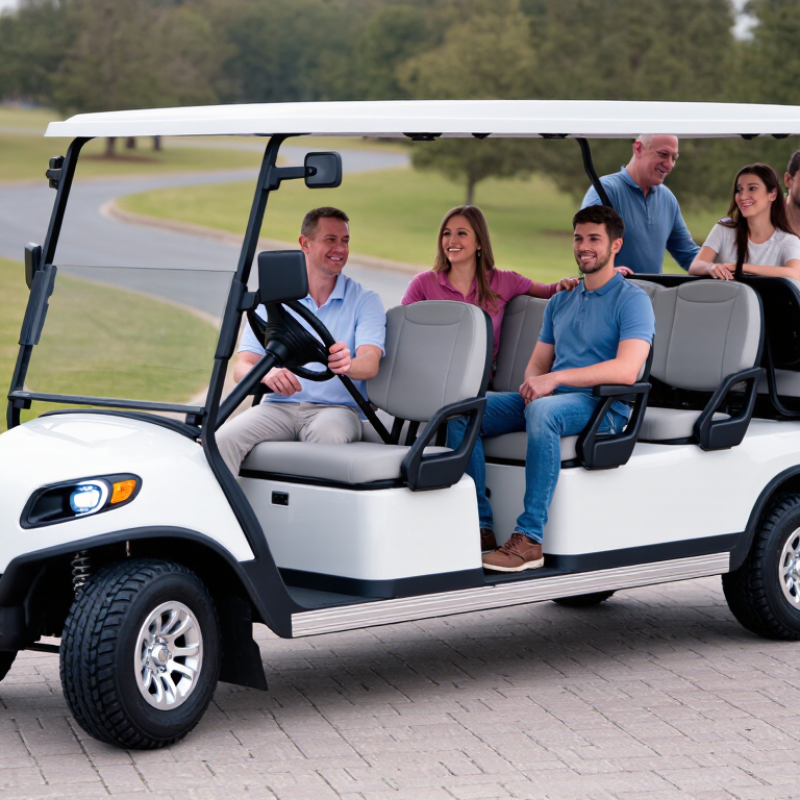
How to Choose a 6 Passenger Electric Golf Cart in 2026?
Define your intended use before comparing batteries, motors, or seat finishes. A six-passenger cart may carry a family, hotel guests, workers, or neighborhood passengers. Those needs are not interchangeable. Measure your regular route, including slopes, narrow gates, parking spaces, and rough surfaces. Then test the cart with six adults, not empty seats. It may feel surprisingly different.
A 2024 Grand View Research report estimated the global golf cart market at about USD 1.75 billion in 2023, with continued growth expected through 2030. Market growth does not mean every cart suits every property. Decide whether you need short recreational trips or daily transportation. The U.S. Department of Energy’s Alternative Fuels Data Center identifies low-speed vehicles as commonly operating between 20 and 25 mph. Local access rules can differ, so verify permitted roads before buying.
Ask practical questions. Will the cart climb a long driveway after rain? Can its charger use your available outlet? Does the rear seat leave enough room for groceries, tools, or a stroller? Six seats often reduce cargo space and may increase charging demands. Battery range figures can also look optimistic. They may assume light loads and flat pavement. I would record real trips for one week before choosing capacity. Sometimes, the overlooked detail is the best warning.
| Decision Dimension | Questions to Define Your Intended Use | Practical Planning Data | Recommended Selection Focus |
|---|---|---|---|
| Primary Use | Will the cart be used on a golf course, private property, a resort, a campground, a farm, or public roads? | Golf-course and private-property use generally has fewer equipment constraints than public-road use. Road use may require additional safety equipment and registration. | Choose a standard six-passenger configuration for short trips, or a more utility-oriented configuration if passengers and cargo will be carried together. |
| Passenger Arrangement | Do you need six forward-facing seats, or is a rear-facing two-passenger seat acceptable? | Many six-passenger carts use two seating rows with four forward-facing seats and two rear-facing seats. Forward-facing seating may be preferable for frequent road travel or passenger comfort. | Check seat direction, legroom, handholds, seat belts where required, step height, and ease of entry before purchase. |
| Passenger and Cargo Load | What is the maximum combined weight of passengers, luggage, tools, groceries, or sports equipment? | Payload capacity varies by design. A six-passenger cart should be evaluated using the manufacturer’s stated total payload rating, not only the number of seats. | Leave a safety margin below the maximum payload, especially when carrying six adults, climbing slopes, or transporting cargo. |
| Travel Distance | What is the longest distance expected between charging opportunities during a typical day? | Real-world range depends on battery capacity, total load, speed, hills, tire pressure, temperature, driving style, and stop-and-go use. Advertised range is normally measured under specific test conditions. | Estimate daily energy use from actual routes and select additional battery capacity if charging access is limited or the route includes hills. |
| Terrain and Grade | Will the cart operate mainly on flat pavement, grass, gravel, mud, or steep hills? | Slopes and loose surfaces increase current demand and reduce range. A fully loaded six-passenger cart needs more climbing capability than a lightly loaded two-passenger cart. | Prioritize motor torque, controller performance, traction, ground clearance, and a suitable braking system rather than focusing only on top speed. |
| Battery System | Do you prefer lower initial cost, lower routine maintenance, or reduced weight? | Lead-acid batteries usually cost less initially but are heavier and require regular inspection and charging practices. Lithium-ion batteries are generally lighter, require less routine maintenance, and usually cost more upfront. | Confirm battery chemistry, usable capacity, expected service life, warranty terms, replacement cost, and compatibility with the charger and vehicle electronics. |
| Voltage and Capacity | Is the electrical system sized for six passengers, hills, and the expected daily distance? | Six-passenger electric carts commonly use higher-capacity systems than small two-passenger carts. Voltage alone does not determine range; battery energy depends on both voltage and amp-hour capacity. | Compare usable energy in watt-hours or kilowatt-hours, continuous motor demand, and expected range under the intended load. |
| Charging Requirements | Where will the cart be charged, and how much time is available between uses? | Charging normally takes several hours and should be performed with the charger specified for the battery chemistry and voltage. A dedicated, properly protected electrical outlet is recommended. | Check charger rating, plug type, charging location, ventilation requirements for the battery system, and whether overnight charging fits your schedule. |
| Speed Requirement | Do you need low-speed transportation inside a property, or higher speed for approved local roads? | Golf carts are often designed for low-speed operation. Legal speed limits and vehicle classifications vary by country, state, province, and municipality. | Choose a speed appropriate for the route. Do not modify the vehicle to exceed its braking, tire, suspension, or legal limits. |
| Road-Legal Equipment | Will the cart travel on public roads? | Depending on local law, road use may require headlights, tail lamps, brake lamps, turn signals, reflectors, mirrors, a windshield, seat belts, a parking brake, a vehicle identification number, insurance, registration, and a safety inspection. | Verify local regulations before purchase. A cart intended only for private property may not meet public-road requirements. |
| Braking and Stability | Will the cart carry six people on slopes, wet surfaces, or uneven ground? | Braking distance increases with speed, passenger weight, cargo weight, and low-traction surfaces. A higher center of gravity and uneven loading can affect stability. | Inspect service brakes, parking brake, tire condition, suspension, steering response, wheelbase, and rollover-prevention features where applicable. |
| Weather Protection | Will the cart be used in rain, strong sun, cold weather, or seasonal conditions? | A roof protects passengers from sun and light rain, while side curtains or doors provide more protection in wet or cold conditions. Cold temperatures can reduce battery performance and range. | Consider a roof, windshield, weather enclosure, wipers, lighting, corrosion protection, and a covered charging or storage area. |
| Dimensions and Storage | Can the cart fit through gates, garage doors, paths, elevators, or storage areas? | Six-passenger models are typically longer and have a larger turning radius than two-passenger models. Exact dimensions vary by seating layout and equipment. | Measure doorway width, ceiling height, turning space, parking area, and transport-trailer dimensions before selecting the vehicle. |
| Ride Comfort | How long will passengers remain seated, and are children, older adults, or mobility-limited users involved? | Comfort is affected by seat cushioning, step height, grab handles, legroom, suspension travel, tire size, and vibration on uneven surfaces. | Prioritize easy access, stable steps, supportive seats, adequate headroom, and a suspension system suited to the route surface. |
| Maintenance Plan | Who will inspect, clean, charge, and service the cart? | Routine checks commonly include tire pressure, brake operation, steering, wheel fasteners, lights, battery connections, charging equipment, and visible frame damage. | Select a vehicle with accessible service points, available replacement parts, clear maintenance instructions, and qualified local service support. |
| Safety and Family Use | Will children, elderly passengers, or inexperienced drivers use the cart? | Passengers should remain seated, keep hands and feet inside the vehicle, and use available restraints. The driver should follow the cart’s seating and payload limits. | Look for secure handholds, reliable parking brakes, clear controls, adequate lighting, mirrors, and a design that discourages overloading or unsafe standing. |
| Total Cost of Ownership | What is the complete budget beyond the purchase price? | Total cost may include batteries, charger, tires, maintenance, insurance, registration, accessories, storage, electricity, and eventual battery replacement. | Compare expected operating costs over several years instead of comparing only the initial vehicle price. |
| Final Fit Test | Can all intended passengers enter, sit, and exit comfortably with the expected cargo? | A specification sheet cannot fully show access, visibility, turning behavior, braking feel, or comfort under load. | Conduct a loaded test drive on representative terrain and verify dimensions, payload, range expectations, charging time, and legal requirements before purchase. |
Planning note: Vehicle specifications and legal requirements vary by configuration and location. Confirm the official payload rating, battery specifications, charging instructions, dimensions, and local road-use regulations before making a final decision.
Decide whether you need family trips, guest transport, work routes, or neighborhood travel. Measure slopes, gates, parking areas, and rough surfaces. Test it loaded.
Six passengers change acceleration, braking, stability, and hill performance. An empty cart may feel comfortable but perform differently with full seating. That matters.
Many low-speed vehicles operate between 20 and 25 mph. Road access rules differ by location. Check permitted routes before purchase.
AC systems often deliver smoother acceleration and stronger hill control. A fully loaded cart needs extra torque on grass, ramps, and uneven paths. Test real conditions.
Lead-acid batteries usually cost less initially but need watering, ventilation, and careful charging. Lithium-ion batteries weigh less and charge faster, but cost more. Neither option is perfect.
Treat advertised range as an estimate, not a promise. Six passengers, hills, low tire pressure, cold weather, and high speed can reduce range sharply. Range claims can disappoint.
Match the charger with the battery chemistry, voltage, and available electrical circuit. Confirm measured charging time and outlet compatibility. A convenient outlet helps.
Record your actual trips for one week, including passenger weight, hills, and weather. Request a range test with six occupants. I would not rely only on specifications.
Choosing a 6 Passenger Electric Golf Cart in 2026 starts with understanding how and where you plan to use it. Consider the number of passengers, typical travel distance, terrain, weather conditions, and available charging access. Compare electric powertrains, battery types, driving range, charging time, and long-term energy costs. Passenger comfort also matters, so review seating design, legroom, weather protection, seat belts, lighting, mirrors, braking systems, and storage capacity.
Before making a decision, check the cart’s dimensions, turning radius, ground clearance, suspension, and ability to handle hills or uneven surfaces. Confirm that its features and intended use meet the requirements of your local area. Finally, evaluate warranty coverage, maintenance schedules, replacement-part availability, service support, and estimated ownership costs. The best choice is not simply the most powerful model, but the 6 Passenger Electric Golf Cart that delivers dependable performance, practical comfort, appropriate safety features, and strong overall value for your specific needs.