A Flip-Out Rear Seat Golf Cart adds a second row that folds outward from the rear of the vehicle. With the seat open, passengers can ride behind the driver. Fold it back, and the space can often carry bags, tools, or other light cargo. The change looks simple. Its effect on daily use is not.
The National Golf Foundation reported 26.6 million on-course golfers in the United States in 2023. That figure describes participation, not demand for rear-seat carts. Still, it helps explain why golf carts serve more than a single purpose at courses, resorts, and private properties. Buyers should check the cart’s rated passenger capacity, seat-belt configuration, rear footrest, and cargo limits. A rear-facing seat may change how weight is distributed. It can also make entry and exit awkward on uneven ground. Small details matter.
A careful introduction should not invent an expert’s credentials or quote. No verifiable, topic-specific expert quotation was supplied for this article, so none is attributed here. That restraint matters. The right flip-out seat depends on the intended route, passenger needs, and the cart manufacturer’s specifications—not appearance alone. A quick inspection helps. Check the hinges, support bars, fasteners, and seat surface for wear before regular use. A neat conversion can still feel unstable if its hardware is loose. The best choice is the one that fits the real job, even when that answer is less exciting.
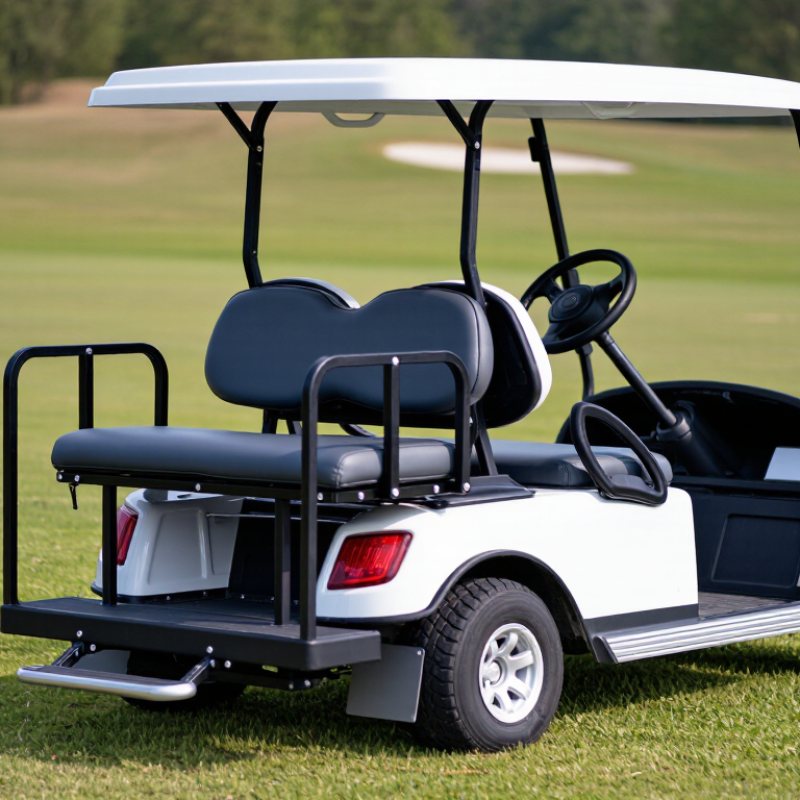
A flip-out rear seat golf cart is defined by a rear section that changes between passenger seating and cargo space. In many designs, the seat cushion lifts or pivots, while the backrest folds down to form a small, flat utility bed. The exact movement varies, so “flip-out” is not a perfectly consistent description.
In passenger mode, the rear bench usually faces backward and may include footrests and handholds. In cargo mode, the lowered panel can carry items such as a cooler, garden supplies, or a folded chair. That matters. The usable area is modest, and bulky loads can shift if they are not secured. Check how the seat locks in both positions, whether the cart’s load limit changes, and how much room remains behind the front seats. A quick look at the hinge and latch can reveal whether switching modes will be easy with cold hands or gloves. The convertible setup is practical, but it is not a full-size truck bed; that distinction is easy to overlook.
| Feature | What It Means | Typical Details |
|---|---|---|
| Basic definition | A golf cart fitted with a rear seat assembly that can fold or pivot outward to create a flat cargo platform. | The rear area can be set up for passengers or used to carry suitable cargo. |
| Passenger seating | The rear-facing seat adds passenger space behind the front seats. | Many configurations provide two rear passenger positions; total capacity depends on the cart’s design and rated capacity. |
| Fold-out cargo platform | When the seat back or seat assembly is repositioned, a platform is exposed for carrying items. | Common uses include hauling light equipment, supplies, or bags. Cargo must be secured and kept within the cart’s load limits. |
| Typical components | The assembly generally includes a seat cushion, a folding or pivoting frame, and a cargo deck or support structure. | Some designs also include passenger footrests, handholds, or a rear guardrail. |
| How it differs from a fixed rear seat | A fixed rear seat is primarily for passengers, while a flip-out design is intended to switch between passenger and cargo use. | The conversion method varies: some seat backs fold down, while other assemblies pivot to form a platform. |
| Common cart types | Flip-out rear seats are used on some four-passenger golf carts and may be installed as original equipment or as an aftermarket conversion. | Compatibility depends on the cart’s frame, body, mounting points, and seat design. |
| Key safety considerations | Passengers should use designated seating, and cargo should not obstruct the driver’s view or interfere with controls. | Follow the cart’s rated passenger and payload limits, secure loads, and use the rear seat only in its intended position. |
| Best suited for | Owners who want one cart to accommodate rear passengers on some trips and carry cargo on others. | Useful for mixed recreational, property-maintenance, and light utility needs. |
Specifications and operating limits vary by cart and seat assembly. Check the vehicle manual and the seat manufacturer’s instructions for fitment, passenger capacity, and load limits.
Release the latch, fold the backrest rearward, and lower it onto its supports. The seatback becomes the platform.
Make sure both support bars sit against the frame and the latch engages. It should feel stable.
Check the hinges and fasteners for dirt, rust, or looseness. Don’t ignore a wobble.
It may hold bags, toolboxes, or garden supplies. Measure bulky items first.
Secure heavy items near the floor and balance them across the platform. Keep loads within the stated limits.
Follow the cart’s passenger and load limits. Check the manual; configurations can differ.
Test the seat while the cart is parked. Check the space needed to fold it out. I might still underestimate the clearance.
The platform may look larger than it is, and a folded seat takes up loading space. That deserves a pause.
A Flip-Out Rear Seat Golf Cart features a rear bench that folds or pivots outward to change the cart’s layout. Its simple seat mechanism lets users switch between carrying extra passengers and making room for bags, tools, or other cargo. Depending on the design, the rear seat may include a platform that becomes a load surface when the seating area is folded away.
This adaptable setup can be useful for golf outings, neighborhood trips, and light-duty tasks where passenger and storage needs vary. Before use, check that the seat is fully secured in the selected position and follow the cart’s passenger and load limits. Regularly inspect hinges, fasteners, and seat supports for wear or looseness, and confirm that the conversion kit is compatible with the cart’s model and configuration. A little care helps keep the seat easy to operate and the cart practical for everyday use.