A Low Profile Street Golf Cart is a compact electric vehicle designed for short urban trips, neighborhood travel, and controlled street environments. Its body sits closer to the ground than a conventional golf cart. That lower stance can improve visual balance, reduce wind resistance, and make entry easier for some drivers. It also creates a distinct driving feel. You sit low, see curbs clearly, and notice every uneven patch of pavement.
Industry safety consultant Michael J. Harkins says, “A golf cart’s small size never removes the driver’s responsibility.” That point deserves attention. A Low Profile Street Golf Cart may include headlights, turn signals, mirrors, seat belts, hydraulic brakes, and a stronger suspension. However, equipment does not automatically make every road suitable. Street access, speed limits, registration, insurance, and equipment standards can vary by location. Responsible owners verify local requirements before driving beyond private property.
This guide examines what makes these carts different, from ground clearance to battery range and passenger capacity. It also considers practical details, such as loading groceries, crossing rough pavement, and parking beside a narrow curb. The low design looks stylish. Sometimes, it may look too low. That is worth questioning. A sleek body can hide limited clearance, reduced visibility, or uncomfortable suspension performance. Understanding those trade-offs helps buyers choose a vehicle that fits real daily use, not merely a showroom impression.
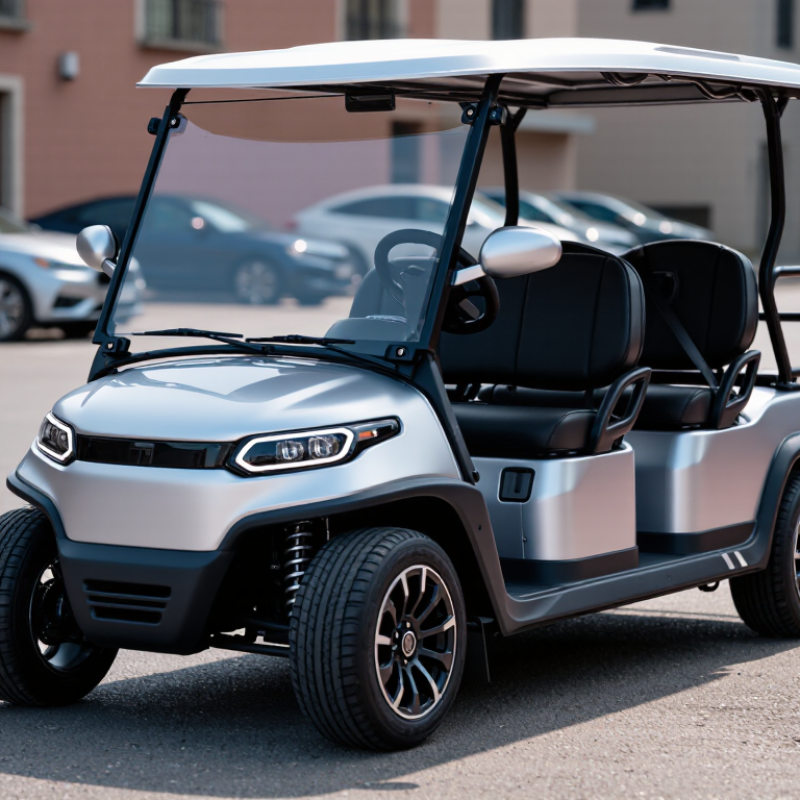
What Is a Low Profile Street Golf Cart?
Definition and Key Dimensions of a Low Profile Street Golf Cart
A low profile street golf cart is a compact electric vehicle designed with a lower body, roof, or seating position. It usually feels easier to enter, park, and maneuver than a taller utility cart. The term “low profile” has no universal measurement. The label is useful, but imperfect.
In practical measurements, many low profile carts are about 90 to 110 centimeters wide and 230 to 300 centimeters long. Their overall height commonly ranges from 155 to 190 centimeters, depending on the roof and windshield. Ground clearance may sit near 10 to 15 centimeters. A lower chassis can improve stability on smooth streets, but it may reduce clearance on rough driveways or speed bumps. That trade-off deserves attention.
Seat height, wheelbase, and turning radius also affect daily use. A shorter wheelbase can make tight corners easier, while a longer design may provide a steadier ride. Measure the garage entrance, parking space, and storage area before choosing one. In field inspections, roof height is often overlooked. It should be measured with the windshield, roof supports, and any installed lights. Street-use equipment and local road requirements can also change the final dimensions. Specifications may differ between configurations, so relying on a product photo is a weak method. Use a current dimension sheet, then verify the actual vehicle.
A low profile street golf cart is a compact, road-oriented electric vehicle designed with a shorter overall height and narrow body. Typical dimensions are approximately 96 inches in length, 48 inches in width, 65 inches in height, and 4.5 inches of ground clearance. Actual dimensions vary by seating layout, suspension, roof design, and local street-use requirements.
What Is a Low Profile Street Golf Cart?
A low-profile street golf cart has a shorter body, lower roofline, and reduced ground clearance than a standard cart. This design feels less bulky on narrow residential roads and private lanes. It also makes entry easier for some drivers. However, the lower stance may provide less clearance over rough pavement, drainage channels, or uneven driveways.
Most models use a 48-volt electrical system. This setup commonly combines multiple batteries to deliver steady low-speed power. In real-world driving, speeds usually range from 15 to 25 mph, depending on motor output, passenger weight, terrain, and battery condition. A level road may allow the cart to reach its advertised speed. Hills can change that quickly. I have seen heavily loaded carts slow noticeably before reaching the top.
The low-profile shape can improve wind resistance and create a more stable feeling during ordinary turns. Still, drivers should check braking response, tire wear, lighting, mirrors, and steering play before regular use. These details matter more than a polished exterior. Range also requires honest testing. A battery indicator may look healthy while voltage drops under load. That can be easy to miss.
Street use depends on local requirements, road access, and required safety equipment. Check the rules where the cart will operate. A short test route helps reveal practical limits.@endsection
| Data Dimension | Typical Specification or Range | Practical Meaning |
|---|---|---|
| Vehicle Type | Low-profile electric golf cart adapted for street use | A compact neighborhood vehicle with a lower overall height than many lifted or utility-style carts. |
| Electrical System | 48 volts is common | A 48-volt system generally provides efficient low-speed operation and is widely used in modern electric golf carts. |
| Motor Output | Approximately 3–6 kW | Actual output varies by motor design, controller settings, passenger load, terrain, and battery condition. |
| Typical Top Speed | 15–25 mph (24–40 km/h) | Lower settings are common for standard golf-course use, while higher speeds may require approved equipment and local-road compliance. |
| Vehicle Height | Approximately 60–72 inches (152–183 cm) | The lower roofline can make garage storage, parking, and access under height-restricted structures easier. |
| Overall Width | Approximately 46–52 inches (117–132 cm) | The narrow footprint is suitable for residential streets, shared paths where permitted, and compact parking spaces. |
| Overall Length | Approximately 90–120 inches (229–305 cm) | Length depends mainly on seating capacity, rear seating design, and cargo equipment. |
| Seating Capacity | 2–6 occupants | Two-seat models are shorter and lighter, while four- and six-seat layouts provide more passenger space but need greater stopping distance. |
| Ground Clearance | Approximately 4–7 inches (10–18 cm) | Low-profile carts usually prioritize stable road handling and easy entry rather than high clearance for rough terrain. |
| Battery Type | Lead-acid or lithium-ion battery packs | Lead-acid batteries are generally less expensive but heavier; lithium-ion packs are lighter and typically require less routine maintenance. |
| Typical Driving Range | Approximately 25–60 miles (40–97 km) per charge | Range depends on battery capacity, passenger weight, speed, hills, tire pressure, temperature, and driving habits. |
| Charging Time | Approximately 4–10 hours | Charging time varies by battery chemistry, charger output, battery state of charge, and pack capacity. |
| Braking System | Mechanical drum brakes; regenerative braking may also be available | Brake performance should be inspected regularly, especially when the cart is used at speeds above typical golf-course settings. |
| Safety Equipment | Seat belts, headlights, taillights, brake lights, turn signals, mirrors, horn, and windshield may be required | Required equipment differs by jurisdiction and by the road classification where the vehicle will operate. |
| Street-Legal Classification | Often treated as a low-speed vehicle or neighborhood electric vehicle | Registration, insurance, licensing, equipment, and speed requirements vary by country, state, province, or municipality. |
| Recommended Operating Environment | Residential roads, private communities, campuses, and designated low-speed areas | Always confirm local rules before using a golf cart on public streets, bike paths, sidewalks, or shared-use trails. |
| Best Advantages | Compact size, quiet operation, easy maneuverability, and low operating energy use | The low-profile design is useful for short-distance transportation where full-size vehicle capacity is unnecessary. |
| Key Limitations | Limited crash protection, modest range, reduced weather protection, and restricted high-speed capability | These vehicles are not a substitute for a full-size passenger car on highways or high-speed roads. |
A low profile street golf cart has a compact stance, reduced height, and a cleaner urban design. Its lower roofline may fit beneath tight garage doors and narrow parking structures. However, a low profile does not automatically mean street legal. Local transportation rules determine the required equipment, speed limits, and operating areas.
Street-legal equipment starts with visible lighting. Headlights should illuminate the road ahead, while taillights, brake lights, and front and rear turn signals must remain clear at night. Seat belts need secure anchors and easy-to-use buckles for every designated seating position. They should not hang loosely or twist around the seat frame. Small details matter.
Mirrors provide a direct view behind the cart, not a decorative reflection of the side panel. A properly adjusted center or side mirror can reveal a bicycle approaching from several car lengths away. In practical inspections, loose mirror mounts and dim lights are common problems. I would check them before every trip.
The cart should also display required warning devices, reflectors, and identification equipment where local rules require them. Requirements differ between cities and regions, so an official inspection checklist is more reliable than a seller’s description. Low-profile models can feel stable, yet their lower seating position may reduce visibility in busy traffic. That trade-off deserves honest attention.
What Is a Low Profile Street Golf Cart?
A low profile street golf cart sits closer to the ground than a conventional cart. That design can improve stability during tight turns, but it reduces ground clearance. Measure the lowest point, not the bumper. A practical setup often needs at least 4–6 inches for uneven pavement, driveway lips, and shallow drainage channels. Lower clearance can become a daily nuisance.
Range depends on battery capacity, speed, temperature, tire pressure, and payload. The International Energy Agency’s 2024 Global EV Outlook reported an average battery-pack price of about $115 per kWh in 2024. Lower prices may support larger packs, but battery size alone cannot guarantee distance. A cart carrying four adults consumes more energy than one carrying two people. SAE J1634 also shows why standardized testing matters: laboratory range figures may not reflect real driving conditions. Catalog range is not a promise.
Payload should include passengers, cargo, and accessories. Keep heavier items low and centered. Tire size changes more than appearance. Larger tires can improve obstacle clearance, but they may increase rolling resistance and reduce acceleration. Smaller tires usually sharpen low-speed response, yet they expose the chassis to harsher impacts. The U.S. Department of Energy’s Fuel Economy Guide stresses correct tire inflation because pressure affects efficiency and handling. Check pressure before every long outing. I would still question any rating tested on smooth pavement alone; potholes tell a different story.
What Is a Low Profile Street Golf Cart?
A low profile street golf cart is a compact electric vehicle with a short body, limited ground clearance, and a lower seating position. It is often used for neighborhood travel, campus movement, gated communities, and short local errands. The design can feel stable and easy to park. However, its lower height may make it harder for drivers to see in busy traffic.
Street legality depends on local classification. Some areas treat these vehicles as neighborhood electric vehicles, while others apply different rules. Registration, insurance, a valid license, speed limits, and approved roads may all be required. Required equipment can include headlights, brake lights, turn signals, mirrors, reflectors, a windshield, seat belts, and a working parking brake. Rules may also change between cities. Check official transportation guidance before driving beyond private property.
Safety starts with realistic speed control. A properly fitted seat belt matters, even during a two-minute trip. Keep both hands available, and avoid carrying passengers beyond the designed seating capacity. Inspect tires, steering, brakes, lights, and battery connections regularly. A qualified technician should examine unusual noise or weak braking. The low profile is useful, but it is not protective. I would not assume a quiet electric motor makes the vehicle easy to notice. Wearing bright clothing, using lights early, and slowing near driveways can reduce that risk. Mistakes still happen. That is why a careful pre-drive check remains worthwhile.
It is a compact electric vehicle with a lower body, roof, or seating position. It usually feels easier to enter, park, and maneuver. The label is useful, but not exact.
Many models measure about 90–110 centimeters wide and 230–300 centimeters long. Overall height often ranges from 155–190 centimeters. Ground clearance may measure around 10–15 centimeters.
Measure the garage entrance, parking space, and storage area. Include the windshield, roof supports, and installed lights. Product photos can mislead. Measure everything.
A lower chassis can feel more stable on smooth streets. It may also reduce clearance over rough driveways and speed bumps. That trade-off matters.
They are often used for neighborhood travel, campus movement, gated communities, and short local errands. They are practical for nearby destinations. They are not suitable for every road.
Road use depends on local vehicle classification and transportation rules. Registration, insurance, licensing, speed limits, and approved roads may apply. Check official local guidance before leaving private property.
Requirements may include headlights, brake lights, turn signals, mirrors, reflectors, a windshield, seat belts, and a working parking brake. Equipment rules can differ between cities. Confirm the current requirements.
Wear a properly fitted seat belt, even for a two-minute trip. Stay within the designed passenger capacity. Check tires, steering, brakes, lights, and battery connections regularly. Use lights early and slow near driveways.
Not always. Drivers and pedestrians may overlook a quiet vehicle, especially in busy areas. Bright clothing and cautious speed can help. I would not rely on silence as protection.
A Low Profile Street Golf Cart is a compact neighborhood electric vehicle designed with a reduced ride height and a streamlined body for easier access, improved stability, and convenient operation in residential areas. Most models use a 48-volt electrical system and may reach approximately 15–25 mph, depending on configuration and local requirements. Its low-profile design can make parking and storage easier, while dimensions such as overall length, width, height, and wheelbase affect maneuverability.
For street use, essential equipment may include headlights, brake lights, turn signals, mirrors, seat belts, a horn, and other required safety features. Performance depends on ground clearance, battery range, passenger and cargo payload, suspension design, and tire size. Users should also consider road conditions, charging needs, visibility, and safe passenger capacity. Because regulations for neighborhood electric vehicles vary by location, owners should verify applicable registration, operating-area, equipment, and safety standards before driving on public streets.