CE-Marked, Heavy-Duty Electric Vehicles Engineered for Campuses, Golf Courses, Municipalities, and Large Facility Operations
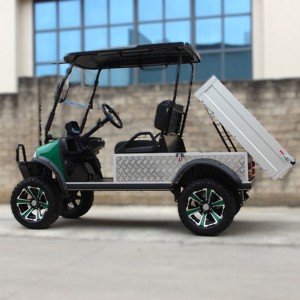
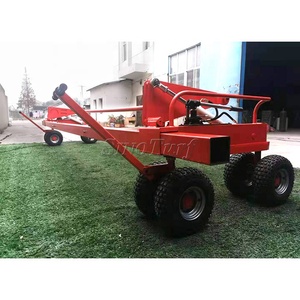
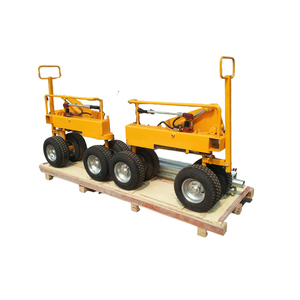
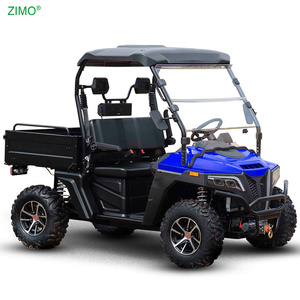
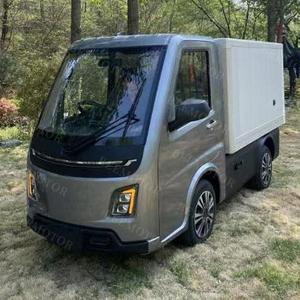
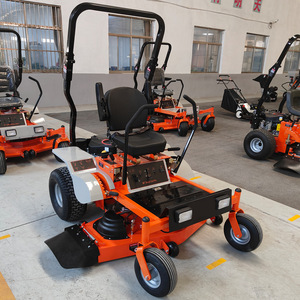
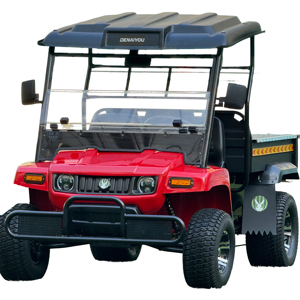
The global commercial utility and turf management vehicle sector is undergoing a fundamental structural transition. Fleet buyers across municipal grounds management, educational campuses, luxury hospitality resorts, and professional sports complexes are rapidly shifting from internal combustion engine (ICE) platforms to advanced CE-certified commercial electric vehicle fleets. This transition is not merely driven by environmental mandates; it is governed by rigorous Total Cost of Ownership (TCO) economics, localized noise pollution directives, and stringent European Conformity (CE) safety standards.
As a leading CE certified commercial fleet exporter, MAC EV engineers and manufactures institutional-grade utility vehicles designed specifically to surpass global regulatory hurdles. Sourcing commercial fleets internationally requires an acute understanding of structural integrity, battery telemetry, safety homologation, and after-sales component interoperability. This document serves as an exhaustive procurement guide, establishing key performance benchmarks, compliance verification criteria, and engineering advancements defining the next decade of commercial utility transport.
Key Compliance Imperative: CE Marking for commercial utility fleets is not a single certification badge. It represents harmonized alignment with the Machinery Directive 2006/42/EC, the Electromagnetic Compatibility (EMC) Directive 2014/30/EU, and the Low Voltage Directive 2014/35/EU, backed by UN38.3 lithium battery transport validation.
B2B procurement officers, municipality sourcing agents, and resort fleet developers must look beyond immediate acquisition unit costs. Future-proofing a commercial fleet involves anticipating regulatory evolution, technological convergence, and operational lifecycle dynamics. Based on empirical telemetry and global export logistics data, four macroeconomic trends are shaping commercial fleet procurement strategies:
Lead-acid and AGM battery technology has become obsolete in enterprise fleet bids. High-density Lithium Iron Phosphate (LiFePO4) with integrated CAN-bus Battery Management Systems (BMS) now represents 94% of new international commercial vehicle tenders due to zero maintenance, non-thermal runaway safety profiles, and 3,500+ full depth-of-discharge cycles.
Modern commercial fleet contracts mandate IoT telematics hubs integrated into vehicle controllers. Fleet directors require real-time remote diagnostics, geofencing capabilities, automated maintenance alert logs, and driver behavioral profiling to optimize asset utilization and minimize insurance liabilities.
Buyers are moving away from single-purpose vehicles. The demand is surging for modular heavy-duty chassis platforms (such as the HDK Turfman 700 series) that allow rapid swapping between aluminum dump beds, turf-spreading implements, cargo boxes, and multi-passenger shuttle configurations within 15 minutes.
Furthermore, ESG (Environmental, Social, and Governance) compliance mandates across North America, Europe, and the Middle East are accelerating the phase-out of diesel-powered turf maintenance equipment. Commercial buyers who establish direct OEM supply chains with qualified CE certified exporters are capturing significant operational advantages, cutting carbon offset costs, and securing preferred municipal contractor status.
Engineered for high-intensity commercial operations, modern electric utility carts and turf machines rely on advanced mechanical and electrical architectures. When evaluating global manufacturing exporters, procurement engineers must scrutinize five critical structural components:
Transitioning from traditional DC motors to brushless AC induction and Permanent Magnet Synchronous Motors (PMSM) provides flat-curve torque delivery essential for ascending 35%+ inclines under max payload. Completely sealed to IP67 standards, these drivetrains eliminate carbon brush wear and operate flawlessly in wet, muddy environments.
Safety compliance requires robust stopping power. While low-end carts utilize mechanical rear drum brakes, enterprise fleet units feature dual-circuit 4-wheel hydraulic disc brakes with auto-engaging electromagnetic parking brakes, ensuring absolute stopping security under maximum GVWR on wet turf.
Golf courses, athletic fields, and landscaped estates require zero ground disruption. Advanced commercial turf carts incorporate wide-footprint flotation tires, optimized weight distribution axles, and zero-turn steering geometry to maintain ground pressure under 12 PSI, preserving turf health.
Corrosion Protection Benchmark: Commercial utility vehicles operating in coastal resorts, turf applications, or winter-salted municipal facilities require electrophoretic dipping (E-coating) followed by robotic powder coating. MAC EV chassis endure a mandatory 480-hour salt-spray chamber test to guarantee structural integrity in harsh climates.
As a premier OEM/ODM enterprise and global exporter of CE-certified commercial fleets, MAC EV operates a specialized manufacturing infrastructure engineered specifically for high-volume B2B supply chains:
State-of-the-art integrated plant housing automated tube bending, robotic chassis welding, E-coating tanks, and dedicated electrical assembly bays.
Every vehicle undergoes rigorous multi-stage testing including electrical load analysis, water tightness checks, and dynamic brake testing prior to crating.
New platform prototypes undergo a continuous 5,000 km high-load stress testing protocol across rough terrain, extreme slopes, and continuous duty cycles.
Custom steel shipping frames and modular knock-down packing options allow maximum container density (up to 10 units per 40HQ), drastically lowering unit sea freight costs.
By maintaining complete internal control over chassis fabrication, wiring harness assembly, and software calibration, MAC EV offers global fleet partners unparalleled customization flexibility. Whether your contract demands specialized hydraulic turf laying attachments, custom municipal paint matching, or custom voltage outputs, our engineering team delivers market-ready solutions backed by comprehensive international documentation.
Addressing the technical, regulatory, and logistics queries most frequently submitted by enterprise procurement teams, fleet distributors, and institutional importers.
Every commercial vehicle exported by MAC EV is accompanied by a full Declaration of Conformity (DoC) establishing compliance with the Machinery Directive 2006/42/EC, EMC Directive 2014/30/EU, and Low Voltage Directive 2014/35/EU. Furthermore, lithium battery options include UN38.3 transport certification, MSDS safety sheets, and full technical construction files (TCF) required for customs clearance in Europe, Australia, and North America.
Our heavy-duty models utilize 5kW to 7.5kW AC induction drivetrains paired with high-rate discharge LiFePO4 battery packs and programmable Curtis/Toyota AC controllers. This configuration maintains steady speed and torque up gradients exceeding 30-35% under full payload, supported by automatic hill-hold electromagnetic safety systems.
Our Grade-A LiFePO4 cells are rated for 3,500 full charge-discharge cycles before reaching 80% residual capacity. In typical commercial operations running 1.5 cycles per day, the battery system delivers an operational lifespan of 7 to 10 years without requiring water refilling, terminal acid cleaning, or active cell balancing maintenance.
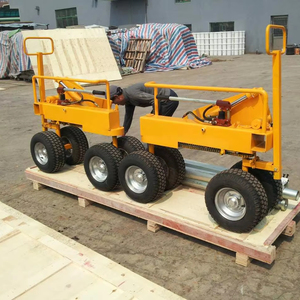
Yes. As a direct manufacturer with in-house engineering and metal fabrication, we provide extensive OEM/ODM capabilities. Specialized turf machines, artificial grass roll lifting apparatuses, and heavy spreader carts can be tailored with specific hydraulic flow rates, lift capacities, and mounting points to fit your exact operational requirements.
MAC EV provides a standard 36-month warranty on lithium battery packs and chassis structures, and 12-24 months on electrical components. We supply exported containers with a recommended fast-moving spare parts kit (relays, brake pads, sensors, switches) along with exploded digital parts catalogs and technician training documentation to ensure zero fleet downtime.
Standard fleet production lead time is 20 to 30 calendar days from deposit confirmation. Custom OEM/ODM orders with special color matching or custom hydraulic tooling require 35 to 45 days. Complete logistics support, including FOB, CIF, or DDP delivery terms, is managed directly through our experienced export compliance division.
