Explore our heavy-duty lifted utility vehicles, specialized artificial turf machinery, and street-legal low-speed vehicles (LSV) certified for international markets.
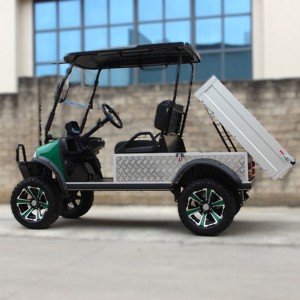
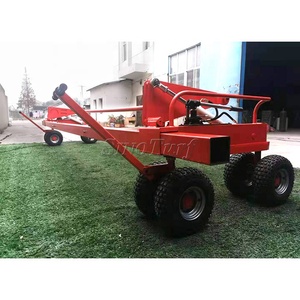
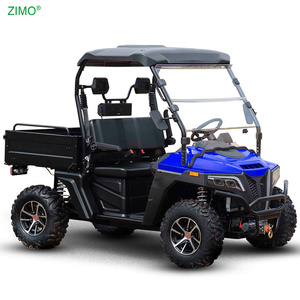
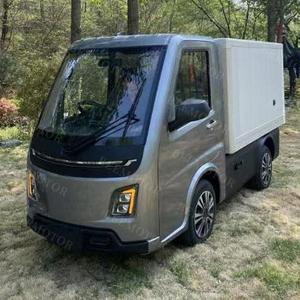
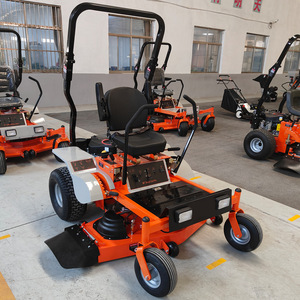
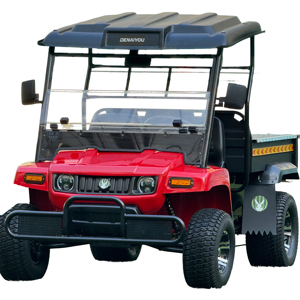
The global market for electric utility vehicles, lifted golf carts, and commercial low-speed vehicles (LSVs) is undergoing a structural transition driven by decarbonization mandates, strict operational safety regulations, and rapid advancements in automotive-grade lithium-iron-phosphate (LiFePO4) battery technology. In commercial operations—ranging from expansive university campuses and luxury golf resorts to agricultural facilities, municipal parks, and heavy-duty artificial turf installation sites—standard low-clearance electric carts frequently fail under rigorous duty cycles. Enterprise buyers and fleet managers are increasingly seeking OEM/ODM manufacturing partners capable of supplying CE Certified Lifted Carts engineered with heavy-duty chassis structures, reinforced suspension systems, and reliable AC electric drivetrains.
CE certification (Conformité Européenne) represents far more than a regulatory stamp for international procurement; it serves as a baseline guarantee of structural safety, electromagnetic compatibility (EMC), and low-voltage electrical safety. Lifted utility carts operate under severe physical stress: higher centers of gravity, increased payload strains, rough terrain navigation, and multi-shift utility cycles. As top-tier manufacturers, we integrate high-tensile hot-dip galvanized steel frames, independent A-arm suspension with adjustable coil-over dampers, and four-wheel hydraulic disc brakes to ensure operational stability, operator safety, and maximum total cost of ownership (TCO) efficiency.
Information Gain Key Metric: Modern enterprise fleets converting from lead-acid gas platforms to CE-certified 48V/72V lithium lifted utility vehicles report a 64% reduction in annual maintenance costs and a 3-year TCO reduction exceeding $4,200 per vehicle operating unit.
To understand what sets commercial-grade lifted utility carts apart from entry-level recreational vehicles, procurement officers must analyze five critical vehicle subsystems: the frame structural geometry, powertrain integration, energy storage chemistry, braking efficiency, and environmental durability testing.
Sealed 5kW to 7.5kW AC motors providing flat torque output across gradients up to 30%, eliminating brush wear while offering smooth regenerative braking downhill.
Automotive-grade lithium chemistry connected to CAN-bus Smart BMS for real-time thermal monitoring, active cell balancing, and over 3,500 full depth-of-discharge cycles.
Four-wheel dual-circuit hydraulic disc brakes replacing outdated mechanical drums, delivering 45% shorter stopping distances under full payload capacity.
6-inch heavy-duty A-arm lift design with hydraulic coil-over shock absorbers engineered to absorb off-road impacts while maintaining precise steering control.
Integrated 10.1-inch IP65 touchscreens featuring backup camera integration, GPS tracking, drive-mode limiting, and remote fault diagnostics.
Hot-dip galvanized chassis frames validated through 480-hour salt-spray testing, designed for coastal humidity, chemical fertilizers, and turf environments.
To assist technical procurement teams, the following comparative matrix details key performance indices evaluated across duty cycles in municipal, commercial, and turf maintenance applications:
| Specification Parameter | MAC EV CE Lifted Utility Cart | Standard Low-Clearance Golf Cart | Gas-Powered Heavy Turf Utility |
|---|---|---|---|
| Ground Clearance | 235 mm (9.25 in) Heavy-Duty Lift | 110 mm (4.33 in) Standard | 180 mm (7.08 in) Standard |
| Powertrain Type | 7.5kW Maintenance-Free AC Motor | 3.5kW DC Motor (Brushed) | 25HP Internal Combustion Engine |
| Energy Storage & Life | LiFePO4 Lithium (3,500+ Cycles) | Flooded Lead-Acid (600 Cycles) | Fossil Fuel (Gasoline / Diesel) |
| Braking Architecture | 4-Wheel Hydraulic Disc + Regenerative | Rear Mechanical Drum Brakes | 4-Wheel Hydraulic Mechanical |
| Payload Cargo Bed Capacity | 400 kg – 800 kg (Electric Hydraulic Dump) | 150 kg Rear Flip Seat Base | 500 kg Hydraulic Dump |
| Compliance Certification | CE Machinery Directive / DOT / ISO9001 | Basic Recreational Standards | EPA / CE Emissions Standards |
| Operational Noise Level | < 52 dB (Ultra-Quiet Electric) | < 58 dB Electric | > 85 dB High Noise Level |
Our state-of-the-art manufacturing infrastructure spans over 18,000 square meters of specialized production space, combining robotic tube welding, automated electrostatic powder coating lines, precision harness braiding, and dynamic multi-stage vehicle testing. As leading CE Certified Lifted Cart Manufacturers & Suppliers, we operate under rigid ISO 9001 quality management standards to ensure every vehicle leaving our assembly lines satisfies global fleet specifications.
Every vehicle configuration undergoes a 100-point end-of-line (EOL) technical inspection. This includes automated brake roller testing, electronic insulation safety verification, 15-degree ramp hill-hold validation, and a 5,000 km continuous fatigue track run per chassis platform.
For international B2B distributors and dealers, we provide comprehensive white-labeling, custom body molding options, bespoke upholstery stitching, and container-optimized packaging (allowing up to 10 units in a 40HQ container) to minimize landed logistics costs.

Global commercial procurement strategy is shifting from short-term initial acquisition costs to long-term lifecycle value optimization. B2B buyers analyzing multi-year fleet investments must align with four primary industry trends:
Lead-acid batteries are rapidly being phased out due to acid spill risks, heavy maintenance overhead (water topping), long charge cycles, and short operational lifespans. Modern LiFePO4 packs feature zero routine maintenance, continuous fast-charging support (80% charge in 2 hours), and stable power delivery that prevents vehicle slowdown on inclines even at low charge states.
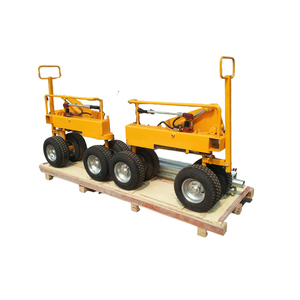
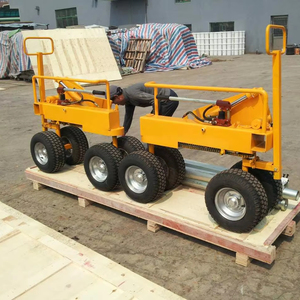
As seen in specialized agricultural and athletic facilities, cart platforms are evolving into multi-functional workhorses. Equipment like our Artificial Grass Roll Lifting and Laying Machine and Electric Turf Dump Trucks combine high-torque motor systems with specialized hydraulic attachments, allowing a single vehicle platform to handle turf spreading, equipment transport, and facility waste removal.
Municipalities and corporate campuses are mandating that utility carts comply with safety directives equivalent to low-speed motor vehicles. Features such as FMVSS 500-aligned lighting systems, DOT-rated laminated safety glass, three-point seat belts, emergency cut-off switches, and 17-digit VIN identifiers are becoming standard requirements for legal operation across public roadways and corporate sectors.
Enterprise buyers now require integrated telematics modules that transmit real-time battery status, vehicle location, fault codes, and driver usage metrics directly to centralized asset management portals. Remote firmware updates (OTA) and geofencing capabilities prevent unauthorized vehicle operation and significantly reduce fleet downtime.
Our R&D engineering teams are actively advancing the next generation of lifted electric utility platforms. Key technological horizons currently being integrated into our product portfolio include:
Partner directly with an established CE Certified Lifted Cart Manufacturer. Request our full 2025 product line catalog, detailed technical data sheets, and competitive B2B wholesale pricing today.
Get Catalog