
CE Certified
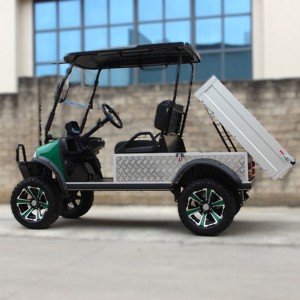
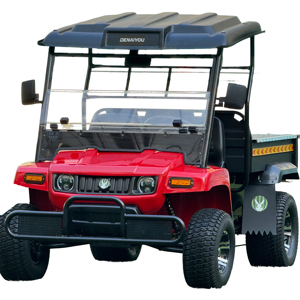
HDK Turfman 700 Heavy-Duty Electric Utility Vehicle
- Heavy-duty reinforced chassis platform
- CE marked with EN ISO 12100 compliance
- Solar panel canopy charging compatible
Engineered for commercial resorts, municipal turf operations, agricultural facilities, and industrial campuses across Europe, North America, and global markets.
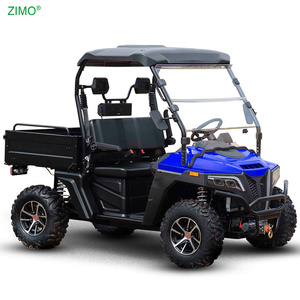
An authoritative technical analysis for procurement directors, commercial fleet operators, and utility equipment importers evaluating next-generation zero-emission assets.
Full conformance with the CE Machinery Directive (2006/42/EC), Low Voltage Directive (2014/35/EU), and Electromagnetic Compatibility Directive (2014/30/EU). Certified for immediate deployment across the European Economic Area.
Utilization of high-efficiency N-Type TOPCon and flexible monocrystalline photovoltaic panels engineered directly into vehicle canopy roofs, yielding continuous trickle charging to extend daily range by 25–35%.
Integrated Automotive-grade Battery Management Systems monitoring cell balancing, real-time SOC, and thermal dissipation, fully certified under UN38.3 and MSDS export logistics protocols.
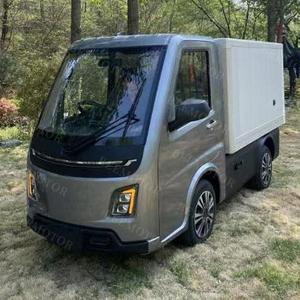
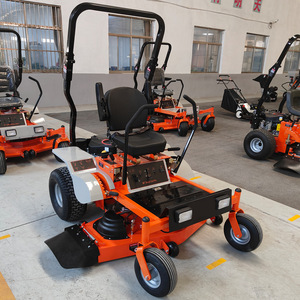
The global transition toward carbon-neutral facility management has accelerated the demand for hybrid solar-electric commercial utility vehicles and specialized turf machinery. Modern fleet managers face dual pressures: operational uptime requirements and strict ESG carbon-reduction mandates. As an established CE Certified Solar Panel Exporter and Utility Vehicle Manufacturer, our engineering architecture resolves this dilemma by integrating high-yield photovoltaic (PV) solar panels into the structural canopies of electric utility vehicles, turf haulers, and maintenance trucks.
By employing N-Type TOPCon (Tunnel Oxide Passivated Contact) solar cell technology, our solar-assisted commercial vehicles convert ambient sun power into direct current (DC) energy at module efficiency ratings exceeding 23.5%. This onboard energy harvesting feeds directly into Maximum Power Point Tracking (MPPT) charge controllers, maintaining optimal voltage input into 48V and 72V LiFePO4 lithium battery banks even under partial shading or low-light conditions.
Technical Insight: Integrating a 360W peak-power CE-certified solar panel roof onto an electric utility vehicle can generate between 1.5 kWh and 2.2 kWh of supplementary energy per operational day. In resort, campus, and turf management duty cycles, this extends vehicle operational range by up to 30 kilometers, effectively eliminating mid-shift battery swapping and reducing grid charging dependency by up to 40%.
Exporting industrial solar equipment and commercial electric vehicles to European markets requires rigorous adherence to European Health, Safety, and Environmental protection standards. A genuine CE mark is not merely a label; it represents rigorous third-party testing and comprehensive technical documentation under the following directives:
Commercial buyers are shifting away from traditional lead-acid electric carts and standalone petrol utility vehicles. Analysis of international procurement data highlights three dominant trends shaping the 2025–2030 market horizon:
A. Total Cost of Ownership (TCO) Optimization: While initial capital expenditure (CAPEX) for a lithium-solar hybrid utility cart is 15–20% higher than conventional lead-acid options, the operating expenditure (OPEX) is dramatically lower. Zero battery watering maintenance, 3,500+ battery charge cycles, and free solar energy harvesting yield a full ROI within 18 to 24 months of continuous commercial deployment.
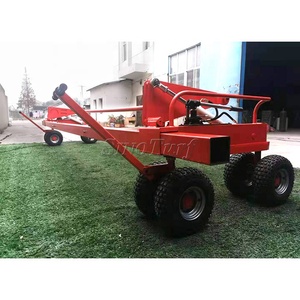
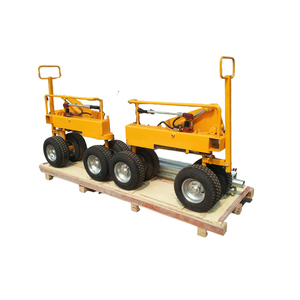
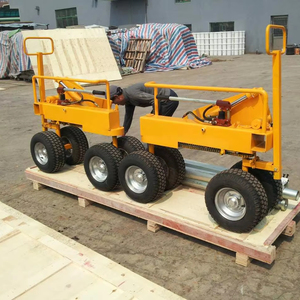
B. Modular OEM/ODM Customization: Global distributors require flexible chassis architectures that can be quickly adapted for diverse application scenarios—ranging from golf course artificial grass roll lifting to resort guest transport and municipal dump operations. Factory-level OEM capability allows tailored branding, specific canopy sizing, custom gear ratios, and specialized hydraulic attachments.
C. Standardized UN38.3 & CE Export Documentation: Global logistics chains require seamless compliance paperwork. Leading exporters provide full MSDS, UN38.3 lithium transport certificates, CE declarations of conformity, and containerized CKD/SKD loading plans to minimize customs clearance times and international freight costs.
Combining vertical manufacturing integration, rigorous quality control, and decades of international export expertise.
Our state-of-the-art facility features automated tube bending, robotic chassis welding, automated powder-coating lines, and specialized assembly bays for both solar canopy structures and electric vehicle drivetrains. In-house manufacturing guarantees strict quality control at every stage.
All structural steel frames undergo hot-dip galvanization and electro-deposition coating, validated by 480 hours of ASTM B117 salt spray testing. This ensures superior resistance against corrosion in coastal resorts, humid island environments, and agricultural settings.
Every utility cart and solar assembly undergoes rigorous testing prior to container packing: dynamic load testing on elevated gradients, braking system performance evaluation, solar charge efficiency mapping, and high-pressure water spray insulation testing.
Our logistics team specializes in container optimization for 40HQ shipments, lowering per-unit freight costs by up to 25%. We supply complete spare-parts kits, technician training manuals, and micro-schematics to support long-term regional dealer networks.
Key information for international buyers, fleet directors, and equipment distributors regarding CE certification, solar integrations, order minimums, and shipping logistics.
CE certification indicates that our solar panels, electric utility carts, and commercial turf vehicles comply with European Union health, safety, and environmental protection standards. For solar panels, this includes IEC 61215 and IEC 61730 safety tests. For utility vehicles, it verifies compliance with the CE Machinery Directive 2006/42/EC, Low Voltage Directive 2014/35/EU, and EMC Directive 2014/30/EU. This allows hassle-free customs clearance and legal operation across all EU member states.
Integrating high-efficiency N-Type TOPCon solar panels into a vehicle’s roof canopy provides continuous auxiliary trickle charging to the onboard lithium battery. This increases daily operating range by 20% to 35%, reduces total battery discharge depth, prolongs overall battery cycle life, and reduces dependence on stationary grid charging infrastructure—ideal for large golf courses, agricultural estates, and remote resort facilities.
Lithium Iron Phosphate (LiFePO4) batteries deliver 3,500+ charge cycles compared to only 500–800 cycles for lead-acid batteries. They weigh 60% less (improving vehicle payload capacity), require zero maintenance watering, charge twice as fast, and maintain flat voltage curves during heavy load operation on steep inclines. Over a 5-year operational lifecycle, LiFePO4 cuts fleet operating costs by over 45%.
Yes. As a factory-direct manufacturer, we offer comprehensive OEM/ODM customization options including custom body colors, branded dashboard graphics, specialized cargo bed dimensions, hydraulic lift attachments, custom wheel/tire packages, higher-wattage solar canopies, and market-specific lighting configurations for road homologation.
Standard production lead times range from 20 to 30 days following order confirmation, while custom OEM orders generally require 35 to 45 days. Minimum Order Quantities (MOQ) start at 2 to 4 units for sample evaluation, with bulk order packaging optimized for 20GP and 40HQ containers. We support FOB, CIF, CFR, and DAP shipping terms backed by full UN38.3, MSDS, and CE export documentation.
We provide a 3-year warranty on LiFePO4 lithium battery packs, 2-year warranty on solar panels and controllers, and a 1-year limited warranty on chassis frame and mechanical components. Distributors receive detailed exploded-view parts manuals, wiring diagrams, diagnostic tools, and priority fast-tracked replacement parts dispatch.
Whether expanding your regional dealership inventory or modernizing a commercial utility fleet, our engineering team provides customized solutions tailored to your operational requirements.