Industry White Paper: Executive Procurement Guide for CE-Certified Zero-Emission Equipment
The global transition toward carbon-neutral operations has fundamentally transformed commercial groundskeeping, municipal turf maintenance, and resort logistics. Purchasing managers and corporate procurement officers face escalating pressures from regulatory mandates such as the EU Corporate Sustainability Due Diligence Directive (CSDDD) and strict municipal noise ordinances. In this environment, transitioning from legacy internal combustion engine (ICE) utility vehicles to high-performance, CE-certified zero-emission electric machinery is no longer merely an ESG milestone—it is an operational necessity.
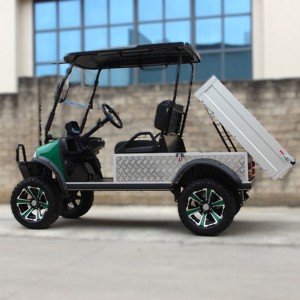
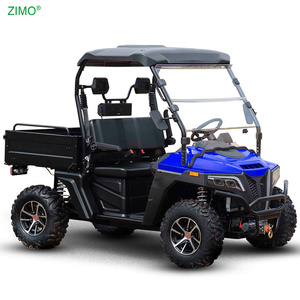
Achieving certified zero-emission status requires rigorous engineering alignment. Genuine CE Certification mandates strict compliance across multiple European directives, including the Machinery Directive 2006/42/EC, the Low Voltage Directive (LVD) 2014/35/EU, and the Electromagnetic Compatibility (EMC) Directive 2014/30/EU. Factory suppliers operating under verified CE frameworks ensure that every vehicle—from heavy-duty 4WD farm utility carts to automated artificial grass paving systems—delivers high industrial reliability without compromising operator safety or environment health.
For enterprise buyers, verifying the authenticity of supplier compliance is critical to avoiding costly customs impoundments and operational downtime. Below is the technical compliance framework built into our manufacturing lifecycle:
Guarantees legal entry into EU markets and ensures operator safety in steep or rugged terrain.
Low Voltage Directive 2014/35/EU
EN 60204-1:2018
Electrical safety validation for 48V–72V DC battery systems, IP67 enclosure sealing, and high-voltage circuit insulation protection.
Eliminates electrical short risk, thermal runaway vectors, and component degradation in wet environments.
EMC Directive 2014/30/EU
EN 61000-6-2 / EN 61000-6-4
Shielding on AC motor controllers and BMS logic circuits to prevent electromagnetic interference with surrounding radio systems.
Allows seamless operation in sensitive environments like modern university campuses and airport logistics centers.
Battery Safety Standard
UN38.3 / IEC 62619
LiFePO4 battery pack structural drop testing, thermal shock resistance, overcharge protection, and MSDS documentation.
Ensures full compliance for international air and sea freight logistics without hazardous material delays.
Next-Generation Technology Trends in Commercial Electric Machinery
The commercial groundskeeping and synthetic turf installation sectors are undergoing a technological convergence. Electrification is no longer limited to swapping out diesel engines for electric motors; it involves redesigning vehicle architecture from the chassis up. Key technological vectors driving current and future machinery developments include:
LiFePO4 & Smart CAN-Bus BMS Integration
Modern commercial utility vehicles have transitioned from legacy lead-acid batteries to high-density Lithium Iron Phosphate (LiFePO4) chemistry. Integrated with CAN-bus Battery Management Systems (BMS), these powertrains deliver real-time cell monitoring, automated thermal throttling, state-of-charge (SoC) precision, and over 3,500 full charge cycles at 80% depth of discharge.
AC Induction Powertrains & Regenerative Braking
High-efficiency 5kW to 7.5kW AC induction motors replace maintenance-heavy brushed DC systems. Coupled with intelligent regenerative braking algorithms, these systems recover up to 15% of kinetic energy on downhill gradients while providing smooth, non-jerk torque control essential for delicate turf handling and steep incline climbing.
Hydraulic Turf Handling & Automated Paving
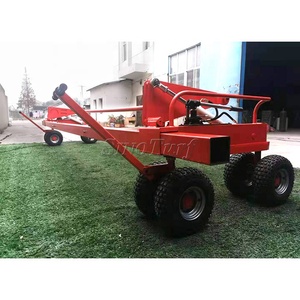
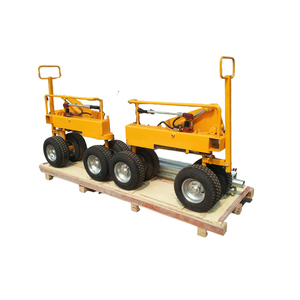
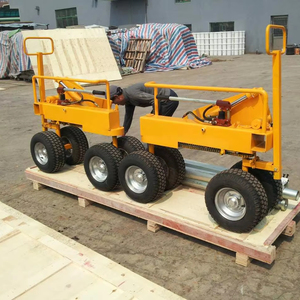
Specialized equipment—such as artificial grass roll lifters and infill spreading carts—now feature electro-hydraulic proportional control valves. This allows millimeter-precise roll alignment, controlled turf tension during unrolling, and uniform sand/rubber infill dispersion without damaging subsurface soil compaction levels.
Strategic B2B Procurement Trends (2025–2030)
Fleet buyers evaluating supplier contracts for the next 5-year operational cycle must account for evolving procurement dynamics. The modern fleet tender is defined by three critical trends:
1. Total Cost of Ownership (TCO) Dominance
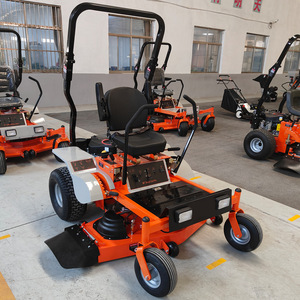
While initial capital expenditure (CapEx) for electric utility vehicles and specialized zero-emission turf mowers is approximately 15% to 25% higher than petrol equivalents, operational expenditure (OpEx) favors electric fleets dramatically. Fuel cost savings of up to 80%, combined with the total elimination of engine oil, spark plug, transmission fluid, and belt replacements, allow fleet operators to reach complete CapEx payback within 14 to 18 months of routine operation.
2. Factory-Direct Modular Customization (OEM/ODM)
Enterprise buyers are moving away from standardized off-the-shelf vehicles in favor of factory-level customization. B2B procurement agreements increasingly demand modular chassis variants that accommodate multi-functional attachments—such as convertible rear flip seats, hydraulic tilt dump beds, custom turf-spreader rigs, or quick-swap lithium battery racks optimized for round-the-clock shift operation.
3. Circular Economy & Battery Traceability
Future-proof suppliers are expected to offer comprehensive battery lifecycle management strategies. Modern CE-certified manufacturers provide standardized diagnostic ports and modular battery enclosures that facilitate second-life stationary energy storage applications once cell capacity drops below 70%, guaranteeing compliance with global extended producer responsibility (EPR) regulations.
Enterprise Advantage: Integrated Manufacturing & Global OEM/ODM Standards
Our manufacturing facility represents the pinnacle of modern electric vehicle production. Spanning an integrated 18,000 m² industrial facility, we maintain total quality control across every phase of production—from raw tube bending and robotic frame welding to electro-hydraulic assembly, lithium battery pack integration, and end-of-line road testing.
In-House Frame & Chassis Fabrication
Utilizing high-tensile structural carbon steel subjected to automated robotic arc welding and a 480-hour salt-spray anti-corrosion powder coating, ensuring long chassis life in coastal resort and high-humidity agricultural environments.
100-Point End-of-Line Inspection
Every unit leaving our production line undergoes rigorous dynamic testing, including full-payload incline holding tests, water-ingress spray validation, hydraulic pressure stability tests, and high-speed emergency braking checks.
Container-Optimized Logistics
Our dedicated export packaging team utilizes modular steel shipping crates and tailored loading plans, maximizing internal 40HQ container space (fitting 8–10 utility units per container) to minimize sea freight costs per vehicle.
Comprehensive After-Sales Support
We empower our global distributor network with exploded 3D spare-parts catalogs, circuit schematics, diagnostic firmware updates, and fast-track spare parts dispatch to guarantee uninterrupted fleet operation.
Commercial Equipment Procurement & Export FAQ
Key technical, regulatory, and purchasing answers for fleet managers and commercial buyers.
What specific CE documentation is provided with international shipments?
Every shipment includes an official Manufacturer’s EC Declaration of Conformity detailing compliance with Machinery Directive 2006/42/EC, LVD 2014/35/EU, and EMC Directive 2014/30/EU. In addition, we supply complete UN38.3 transport safety test reports, Material Safety Data Sheets (MSDS) for LiFePO4 battery packs, and factory inspection certificates required for clearance by customs authorities worldwide.
How do electric utility carts perform on steep inclines and wet turf?
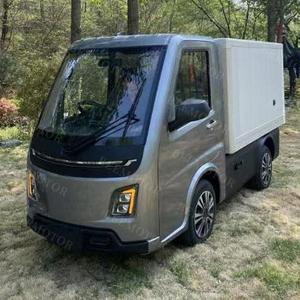
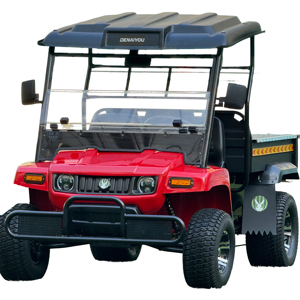
Our electric utility vehicles (such as the HDK Turfman 700 and 4WD Farm Utility Vehicle) feature high-torque 5kW–7.5kW AC induction motors paired with low-center-of-gravity chassis designs. Equipped with 4-wheel hydraulic disc brakes, mechanical parking locks, and specialized low-ground-pressure turf tires, these vehicles safely negotiate inclines of up to 30% without slipping or causing soil damage on wet grass.
What is the expected operating range and charge time for lithium fleets?
Equipped with our standard 48V/105Ah LiFePO4 battery pack, utility carts achieve an operational range of 70 to 80 km per charge under standard load conditions. Extended 150Ah configurations deliver up to 100 km. Using our high-efficiency onboard smart charger (110V–240V wide input), a complete full charge takes approximately 5 to 6 hours, while opportunity charging during lunch breaks can top up 30% capacity in under 90 minutes.
Can artificial turf transport and paving machines handle heavy athletic rolls?
Yes. Our artificial grass lifting, laying, and transport machinery is purpose-built for heavy-duty commercial athletic fields and school playgrounds. Featuring hydraulic lift arms rated for rolls weighing up to 1,200 kg, these machines spread grass rolls smoothly while minimizing labor requirements by up to 70% during large stadium installations.
What OEM/ODM customization options are available for fleet buyers?
We offer extensive factory-level OEM/ODM customization options including custom body color matching (RAL code), custom seat upholstery and embroidery, dashboard graphic branding, custom cargo box dimensions, hydraulic dump system retrofits, light bars, and market-specific speed limiter configurations.
What production lead times and shipping terms do you support?
Standard vehicle models typically feature a production lead time of 20 to 30 days from deposit receipt, while highly customized OEM/ODM orders take 35 to 45 days. We support flexible trade terms including FOB, CIF, DDP, and DAP, handling all export documentation and container stowage optimization directly from our factory plant.
Accelerate Your Zero-Emission Fleet Transformation
Partner directly with a certified EV manufacturer. Contact our engineering and export team today to receive full technical datasheets, CE compliance files, and wholesale container pricing.