Precision-engineered utility carts, turf maintenance vehicles, and heavy-duty electric transporters verified for municipal, resort, and commercial facility operations.
An Industry Whitepaper on Powertrain Engineering, Payload Optimization, and Total Cost of Ownership (TCO) for Enterprise Buyers
Over the past decade, the global commercial cart market has transitioned rapidly from traditional internal combustion engine (ICE) utility vehicles to high-efficiency, zero-emission electric platforms. As procurement teams evaluate international supply chains, China commercial cart manufacturers have emerged as front-runners in engineering innovation, battery management system (BMS) integration, and scalable modular vehicle design.
Selecting an OEM/ODM manufacturing partner in China requires looking beyond upfront unit pricing. Leading enterprise buyers prioritize chassis structural integrity, drivetrain duty-cycles, homologation standard alignment (CE, DOT, LSV), and lifecycle parts availability. This technical briefing breaks down the engineering criteria, technological trends, and procurement considerations that define modern commercial utility cart manufacturing.
Industrial commercial carts require heavy-duty robotically welded steel chassis treated with electrophoretic deposition (ED) coating and powder finishing. This multi-layer corrosion barrier resists salt spray, fertilizer chemicals, and severe weather up to 480 hours of ASTM B117 testing.
Transitioning from legacy brushed DC motors to 5kW–7.5kW AC Induction and Permanent Magnet Synchronous Motors (PMSM) yields up to 92% system efficiency. Integrated regenerative braking recovers kinetic energy on slope descents while dramatically reducing brake pad wear.
Standardized Lithium Iron Phosphate (LiFePO4) battery packs provide up to 3,500 continuous discharge cycles at 80% Depth of Discharge (DoD). Integrated CAN-bus BMS communicates real-time thermal status, cell balancing, and state-of-charge (SoC) parameters to the vehicle central ECU.
Replacing traditional rear drum brakes with dual-circuit 4-wheel hydraulic disc brakes ensures consistent stopping capability under maximum load conditions. This system eliminates brake fading during continuous operation on 20%+ gradients in campus or hilly terrain.
Heavy-duty commercial turf machines feature specialized wide-footprint flotation tires designed to distribute payload weight evenly. This engineering detail prevents turf compaction, root damage, and soil tearing on golf courses, athletics fields, and landscaped estates.
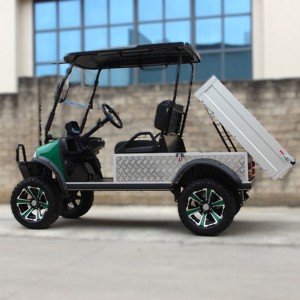
Integrated manufacturing workflows allow customized chassis lengths, cargo bed hydraulic dump kits, enclosure configurations, and branded aesthetic panels. Engineering teams provide 3D CAD modeling and prototype validation within expedited procurement cycles.
Tier-1 commercial cart manufacturers differentiate themselves through comprehensive vertical integration. Rather than operating purely as assembly facilities, top-tier factories control frame bending, robotic welding, wire harness fabrication, and battery pack assembly in-house.
Every commercial vehicle undergoes a rigorous 100-point inspection process prior to container loading. Testing protocols include dynamic brake distance verification, full-payload steep incline hold tests, waterproofing seal checks, and high-voltage insulation checks on electric control systems.

Key technological shifts shaping the next generation of commercial utility carts and lawn maintenance machinery.
Commercial fleet buyers in hospitality, municipal maintenance, and educational campuses are rapidly adopting connected vehicle architectures. Modern electric commercial carts feature CAN-bus IoT gateways that transmit real-time telemetry metrics—including GPS location, battery thermal trends, cell degradation data, driver behavior patterns, and diagnostic fault codes—directly to central management dashboards.
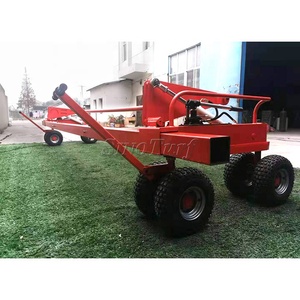
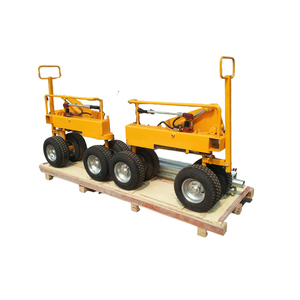
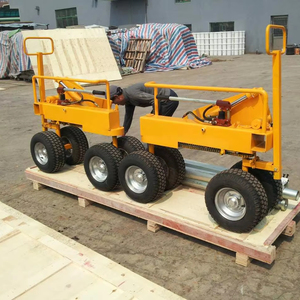
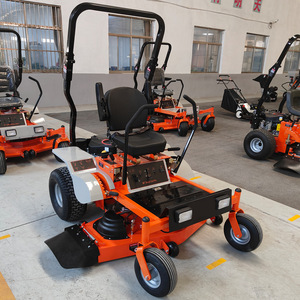
The rapid global growth of synthetic turf fields in schools, athletic complexes, and stadiums has spurred demand for specialized utility machines. Modern turf carts are no longer simple transport tools; they integrate hydraulic roll-lifting arms, automated spreading hoppers, and zero-turn lawn trimmers. Purchasing trends favor multi-functional units capable of performing heavy transport and precision turf laying on single-vehicle chassis platforms.
To eliminate operational downtime during multi-shift commercial work, manufacturers are moving from 48V system topologies to 72V and 96V architectures. Higher operating voltages reduce current draw, heat dissipation, and cable thickness while allowing 1-hour fast charging via industrial DC chargers or Level 2 EVSE stations.
5-Year Commercial Fleet Financial Evaluation: Lithium Electric vs. Lead-Acid vs. Gas Utility Carts
| Evaluation Parameter | LiFePO4 Commercial Cart (Our Standard) | Traditional Lead-Acid Electric Cart | Gasoline (ICE) Utility Vehicle |
|---|---|---|---|
| Initial Capital Expenditure (CapEx) | Moderate – High | Low – Moderate | Moderate |
| Expected Battery / Engine Lifespan | 8 – 10 Years (3,500+ cycles) | 2 – 3 Years (600 cycles) | 5 – 7 Years (Engine overhaul required) |
| Routine Maintenance Requirement | Zero (Sealed brushless system) | High (Watering, terminal anti-corrosion) | Very High (Oil, filters, spark plugs, belts) |
| Energy / Fuel Cost per 100km | $1.20 – $1.80 (Electric grid) | $2.10 – $2.80 (Efficiency losses) | $8.50 – $12.00 (Standard petrol/diesel) |
| Brake System Wear Rate | Low (Regenerative braking deceleration) | High (Friction drum braking) | High (Standard hydraulic disc/drum) |
| 5-Year Operational Savings | Baseline (+45% TCO Reduction) | -30% vs LiFePO4 (Due to replacement packs) | -60% vs LiFePO4 (High fuel & maintenance) |

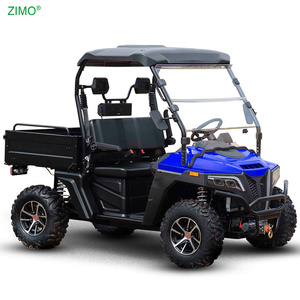
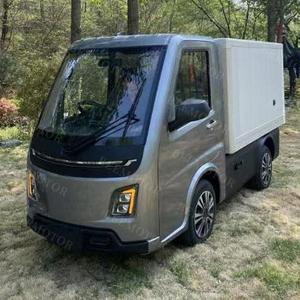
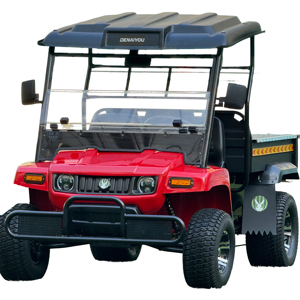
Commercial carts engineered in China serve diverse global industries. Determining the correct chassis frame, battery capacity, motor power, and attachment configuration requires assessing operating ground conditions and daily duty cycles:
Essential information for enterprise sourcing directors, fleet managers, and commercial distributors.
