Engineered for commercial turf management, facility logistics, resort transport, and rugged off-road operations.
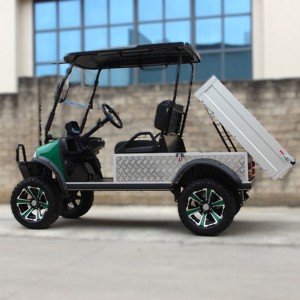
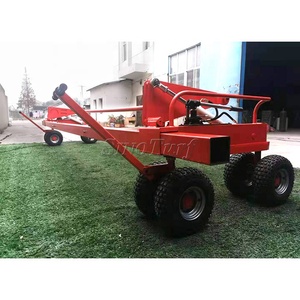
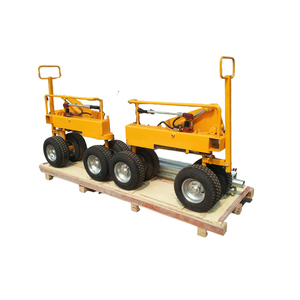
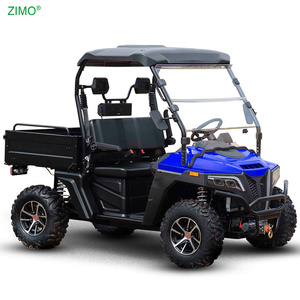
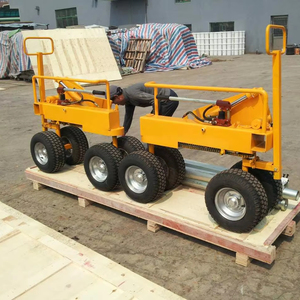
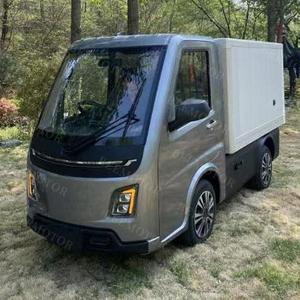
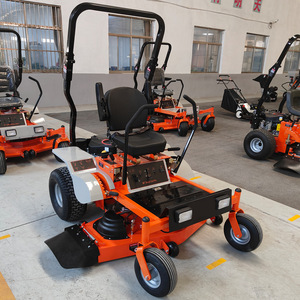
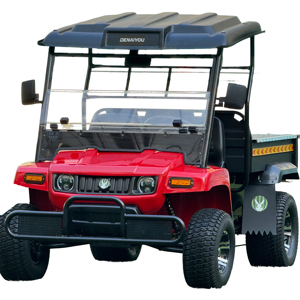
The global demand for lifted electric utility vehicles, off-road resort shuttles, street-legal Low-Speed Vehicles (LSVs), and specialized agricultural machinery has undergone a structural shift over the past five years. Sourcing professionals and commercial fleet managers are no longer evaluating Chinese suppliers solely on unit price. Instead, procurement criteria have evolved toward suspension kinematic engineering, structural steel tensile properties, drivetrain integration, and rigorous compliance certifications (DOT, FMVSS 500, CE, and UN38.3).
Historically, aftermarket golf cart lift kits relied on basic drop-axle brackets or welded spindle extensions that altered steering geometry, induced severe bump-steer, and accelerated tire tread wear. Leading Chinese manufacturers—such as MAC EV—have revolutionized the sector by transitioning from primitive bolt-on brackets to fully integrated independent A-arm lift suspension platforms engineered directly into the chassis manufacturing process.
When procuring lifted electric vehicles or bulk OEM lift kit components from China factories, procurement teams must understand the physical and structural trade-offs of different lift architectures. Below is a engineering evaluation matrix comparing primary manufacturing standards:
| Lift Architecture | Structural Metallurgy | Ground Clearance | Steering Geometry Stability | Fleet Duty Cycle Suitability |
|---|---|---|---|---|
| Spindle Extension Lift | Cast Iron / Ductile Steel | +3 to +4 Inches | Moderate (Increased Scrub Radius) | Light Residential / Flat Golf Courses |
| Drop-Axle Bracket Lift | Q235 Mild Welded Tube | +4 to +5 Inches | Low (Noticeable Bump-Steer) | Light Utility / Campus Maintenance |
| Heavy-Duty Independent A-Arm | Q345B Micro-Alloy Steel | +6 Inches (235mm) | Optimal (Ackerman Compensated) | Commercial Resort, Agriculture & Turf |
| Integrated Long-Travel Coil-Over | Seamless Chromoly / E-Coated Steel | +6 to +8 Inches | Factory Calibrated (Zero Bump-Steer) | Heavy Industrial / Off-Road Rental Fleets |
Factory-level suspension design requires high-precision Finite Element Analysis (FEA) to simulate load stress under dynamic conditions. Frame rails constructed from robotic-welded Q345B high-tensile steel withstand torsional twisting under maximum payload (up to 400 kg cargo bed load), preventing stress fractures at control arm mounting points.
Robotic MAG welding cells guarantee 100% seam consistency on lift kit control arms and main frame sub-assemblies, eliminating human error under high vibrational fatigue.
5kW to 7.5kW brushless AC motors paired with heavy-duty 16:1 transaxles provide flat torque delivery, overcoming the elevated inertia of 23-inch all-terrain tires.
Dual-layer electrophoretic deposition (E-coating) plus industrial powder topcoat ensures corrosion-free operation in oceanfront resorts and high-salinity agricultural environments.
As international regulations tighten regarding emissions, street-legality, and battery safety, global buyers must align with Chinese factories that actively invest in next-generation technologies. Key procurement trends shaping the industry include:
The industry standard has permanently shifted away from traditional flooded lead-acid batteries. Modern commercial fleets specify 48V and 72V LiFePO4 packs offering 2,000 to 3,500 charge cycles, zero terminal maintenance, and up to a 60% reduction in battery weight. Integrated CAN-bus Battery Management Systems (BMS) communicate real-time thermal data, cell voltage equalization, and state-of-charge directly to the vehicle's 10.1-inch digital touchscreen dashboard.
Commercial operators increasingly demand dual-purpose capabilities: vehicles that handle rugged resort or farm terrain while maintaining compliance with DOT, FMVSS 500, and CE street-legal requirements. Top-tier China manufacturers provide pre-installed DOT-rated safety glass windshields, 3-point seatbelts, LED headlights with integrated turn signals, 17-digit VIN allocations, and hydraulic 4-wheel disc braking systems as standard factory equipment.
Standard off-the-shelf golf carts are being replaced by purpose-built modular utility platforms. From artificial turf spreading carts and hydraulic dump beds to high-capacity 6-passenger resort shuttles, factories offering rapid custom metal fabrication, tailored gear ratios, and private-label branding provide a decisive competitive edge to overseas distributors.
Operating an 18,000 m² state-of-the-art production plant, MAC EV specializes in high-end electric golf carts, lifted utility platforms, and street-legal LSVs. We integrate complete chassis stamping, robotic frame welding, automated powder coating, electrical harness synthesis, and 100-point end-of-line vehicle testing under one roof.
Essential insights for importers, fleet managers, and OEM private-label distributors.
A lifted utility vehicle features an elevated suspension clearance (typically 4 to 6 inches higher), lengthened steering knuckles, modified A-arms, extended shock absorbers, and larger 22-inch to 23-inch all-terrain tires. To maintain performance, factories must re-gear the differential transaxle (often from 12:1 to 16:1) and equip higher-wattage AC controllers to handle the increased rotational torque requirements without motor overheating.
Larger diameter tires increase mechanical leverage against braking systems. Traditional rear mechanical drum brakes suffer from thermal fade and extended stopping distances under heavy load or on downhill gradients. Hydraulic 4-wheel disc brakes provide balanced hydraulic pressure to all four corners, ensuring reliable stopping distance even when carrying maximum passenger or cargo bed capacity.
For European markets, CE certification and vehicle safety compliance documentation are required. For North America, street-legal LSVs require DOT registration alignment, 17-digit VIN stamping, compliance with FMVSS 500 standards, and UN38.3 plus MSDS documentation for lithium battery air/sea transit.
Electrophoretic deposition (E-coating) immerses the entire raw steel frame into a charged liquid paint bath, ensuring complete interior tube coverage that spray paint or powder coating cannot reach. Combined with a salt-spray rating of 480+ hours, this process prevents internal rust degradation in oceanfront resorts, turf environments exposed to fertilizers, and winter-salted roadways.
We support comprehensive customization including custom PPG body paint colors, two-tone hand-stitched marine upholstery, custom alloy wheel rims, branded touchscreen graphics, specialized cargo bed configurations (hydraulic dump, flatbed, utility box), and market-specific speed limiter calibrations.
Standard production lead time is 20 to 30 days. For international shipping, a 40HQ high-cube container typically holds 8 to 10 lifted 4-passenger units or utility carts depending on roof and windshield packing configurations. SKD (Semi-Knocked Down) or CBU (Completely Built Up) packing options are available to optimize freight logistics costs.
