Electric Vehicle Manufacturing & Global Export  |  OEM · ODM · Dealer Programs

Custom OEM LED Headlights Manufacturers & Suppliers

Engineering Next-Generation Automotive & Utility Vehicle Optical Systems with ECE/DOT Compliance, Advanced Thermal Dynamics, and Scalable Turnkey OEM/ODM Supply Chains.

Factory Recommended Range

Precision-Engineered OEM LED Headlight Assemblies

Designed for heavy-duty electric utility vehicles, commercial fleets, golf carts, and custom automotive platforms. Built to withstand rugged environments while delivering maximum photometric intensity.
Heavy Duty Campus & Facility Utility Vehicle LED Headlight System

Heavy-Duty Chassis Utility Vehicle Integrated LED Front Optical Module

  • Luminous Efficacy: 130 lm/W
  • Voltage Compatibility: 48V - 72V DC
  • Ingress Rating: IP68 Hermetic
Inquire Now
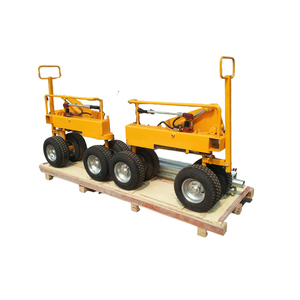
Lawn Transport Machine OEM Waterproof Headlight Assembly

High-Vibration Resistant Lawn Transport Vehicle Sealed LED Headlamp

  • Optics Type: Asymmetric Cutoff
  • Thermal Control: Copper Substrate
  • Certifications: CE / DOT Compliant
Inquire Now
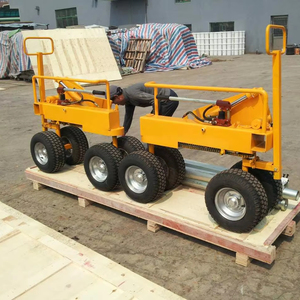
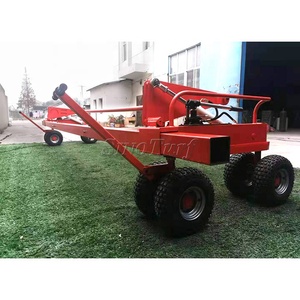
Playground Turf Spreading Tool High-Output Worklight

Multi-Angle High-Beam Spreading Tool LED Illumination Module

  • Power Draw: 45W Low / 65W High
  • Color Temp: 5700K Daylight
  • Lens Material: UV420 Hard-Polycarbonate
Inquire Now
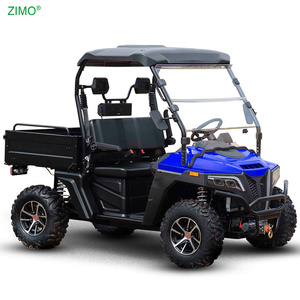
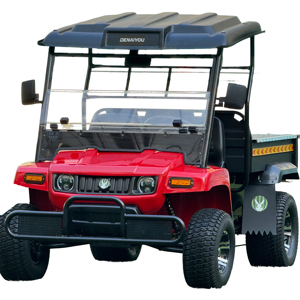
4 Wheel Drive Farm Utility Vehicle Matrix LED Headlight

4WD Off-Road Farm Utility Vehicle Dynamic Matrix LED Lighting Array

  • Driver Tech: CANbus Integrated
  • Operating Temp: -40°C to +85°C
  • Housing Material: Die-Cast ADC12 Alloy
Inquire Now
High Efficiency Turf Carrier Vehicle LED Headlamp Unit

Commercial Equipment Carrier Anti-Glare LED Headlight System

  • Beam Pattern: Wide Flood / Spot Dual
  • EMC Rating: CISPR 25 Class 5
  • Lifespan: > 50,000 Hours
Inquire Now
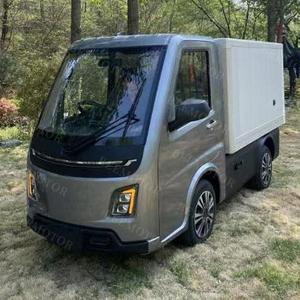
2025 Commercial Electric Cart Street Legal LED Kit

2025 Commercial Pick-Up LSV DOT-Approved Dual-Projector Headlamp

  • Homologation: SAE J583 / ECE R112
  • DRL Feature: Integrated Halo Ring
  • Module Type: Direct Plug-and-Play
Inquire Now
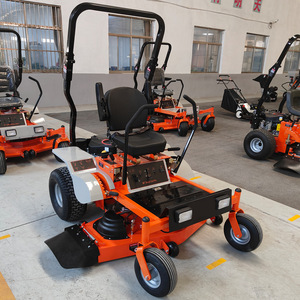
Zero Turn Estate Maintenance Vehicle Ultra Bright Headlamp

Large Scale Estate Maintenance Ride-On Vehicle High-Lumen Headlamp

  • LED Chips: Custom Automotive CSP
  • Thermal Resistance: < 1.2 °C/W
  • Reflector Tech: Free-Form Micro-Optic
Inquire Now
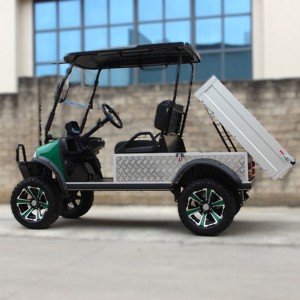
Electric Turf Dump Truck Heavy Duty Sealed LED Front Light

Electric Dump Truck Industrial Duty Vibration-Dampened LED Headlamp

  • Shock Resistance: 20G Heavy Impact
  • Input Voltage: 12V - 96V Wide Range
  • Lens Hardness: 8H Anti-Scratch
Inquire Now
18,000 m²
Integrated OEM Plant
< 50 PPM
Strict Quality Defect Rate
50,000+
Hours Operational Life
480 Hrs
Salt Spray Corrosion Validated
Manufacturing Capability Whitepaper

Why Tier-1 OEMs Partner With Us For Custom Headlight Solutions

Bridging optical innovation with high-volume manufacturing rigor. Our engineering facilities provide turnkey OEM/ODM solutions tailored for global automotive, golf cart, resort shuttle, and specialized commercial fleets.

In-House Photometric & Optical Design

We utilize advanced TracePro and Speos optical simulation software to develop custom free-form reflectors and projection lenses. Our designs guarantee razor-sharp beam cutoff gradients ($d\beta/d\theta > 0.13$), eliminating glare for oncoming traffic while maximizing forward lux distribution according to ECE R112 and DOT SAE J583 standards.

Thermal Management & PCB Architecture

Thermal dissipation is the single critical factor governing LED degradation. We deploy direct copper bonding (DCB) and thermoelectric separation copper substrates paired with die-cast ADC12 aluminum heatsinks. This architecture maintains LED junction temperatures ($T_j$) strictly below 85°C, eliminating thermal throttling and ensuring zero lumen depreciation over 50,000 hours.

EMC CISPR 25 Class 5 Suppression

Modern commercial electric vehicles carry sensitive CANbus networks, radar sensors, and touchscreen infotainment consoles. Our custom-designed constant-current drivers incorporate multi-stage LC filters and shielded inductors, meeting stringent CISPR 25 Class 5 electromagnetic compatibility tests to prevent RF interference with vehicle electronics.

Engineering Information Gain: Lux vs. Lumens in OEM Headlight Specification

Many aftermarket suppliers market headlights based solely on raw LED lumen output, which fails to represent real-world visibility performance. In engineering OEM optical solutions, Lux at 25 meters and beam intensity uniformity are the decisive engineering metrics. A 2,000 lumen assembly equipped with optimized projection optics routinely delivers higher center-beam lux and better road safety than an uncollimated 5,000 lumen light flood, while consuming 60% less battery energy—a crucial factor for electric utility vehicle range optimization.

Technical Comparative Matrix

OEM LED Headlight Component & Test Standards

A detailed look at the component-level engineering standards enforced across our automated manufacturing lines.

Engineering Subsystem Standard Specification Custom OEM Option Validation Test Standard
LED Emitter Technology Automotive Grade CSP / Flip-Chip LED Laser-Assisted High Beam Modules LM-80 Lumen Maintenance (>50,000 hrs)
Optical Reflector / Lens Optical PMMA / High-Transmittance PC Anti-Fog Hydrophilic Internal Coating ASTM D3359 Adhesion & Hard-Coat Test
Heat Dissipation System Passive ADC12 Aluminum + Copper Pipe Active Hydraulic Fan (IP67 Rated) Thermal Shock (-40°C to +105°C Cycle)
Driver & Voltage Regulation 9V-32V Wide DC Constant Current Integrated 48V-96V Direct EV Step-Down ISO 7637-2 Electrical Transient Surge
Enclosure & Sealing Purge-Vent Gore Membrane + Liquid Silicone Custom Color Powder Coated Bezel IP68 / IP69K High Pressure Washdown
Structural Resistance Anti-UV Polycarbonate Lens Shell Vibration Isolation Rubber Mountings SAE J575 Vibration & Impact Test
Market Intelligence

Future Procurement & Technology Trends in OEM Vehicle Lighting

Understanding where automotive and utility vehicle illumination is heading over the next 5 to 10 years to protect your platform toolings from premature obsolescence.

1. Transition from Modular Bulbs to Fully Integrated Solid-State Light Engines

The era of replaceable LED bulbs inside halogen reflector housings is ending for OEM manufacturers. Modern vehicle procurement is shifting completely toward integrated solid-state optical engines. By eliminating mechanical bulb sockets, engineers can reduce headlight enclosure depth by up to 40%, improve thermal coupling, and achieve hermetic IP68 sealing. OEMs benefit from lower assembly labor costs, zero socket oxidation failures, and sleek modern front-fascia styling.

2. Adaptive Driving Beam (ADB) & Micro-Pixel Matrix Headlights

Once restricted to luxury passenger cars, Adaptive Driving Beam (ADB) matrix technology is penetrating commercial, resort LSV, and campus shuttle platforms. By integrating multi-channel micro-LED arrays driven by machine vision sensors, ADB headlights automatically dim specific beam segments around approaching vehicles while maintaining full illumination on surrounding roadways. Sourcing matrix-ready optical platforms allows OEMs to future-proof vehicles against evolving street-legal safety mandates.

3. Direct High-Voltage EV Driver Integration (48V - 96V Native)

Traditional 12V auxiliary electrical systems in electric golf carts and low-speed vehicles (LSVs) require bulky DC-DC converters to power lighting accessories. The market is aggressively moving toward native high-voltage input LED drivers capable of accepting 48V, 60V, or 72V traction battery power directly. This eliminates weight, reduces wiring harness complexity, removes a single point of DC-DC failure, and improves total drivetrain energy efficiency.

4. Sustainable Materials & Modular Recyclability Regulations

Global environmental directives (such as EU RoHS and REACH) are forcing vehicle buyers to audit the life-cycle footprint of optical components. Future-ready headlight suppliers are replacing toxic brominated flame retardants with bio-based polyamides and recyclable aluminum alloys. Furthermore, modular design practices allow lenses, LED circuit boards, and aluminum housings to be unbolted and sorted into raw material streams at vehicle end-of-life, simplifying compliance for global export buyers.

Manufacturing Process

Custom OEM Tooling & Production Workflow

From initial CAD concept rendering to mass production and container loading—structured for minimal NVR tooling costs and rapid speed-to-market.

PHASE 01

Optical & Mechanical CAD

We collaborate with your vehicle design team to model 3D housing geometry, mounting points, connector pinouts, and photometrics. Ray-tracing simulation ensures compliance before cutting steel molds.

PHASE 02

Rapid Tooling & Prototyping

Using high-precision CNC aluminum tooling and SLA 3D printing, we deliver functional samples within 15–20 days. Prototypes undergo photometric goniometer testing and thermal profiling.

PHASE 03

Automated SMT & Assembly

High-speed Yamaha surface mount technology (SMT) lines place automotive-grade CSP chips onto aluminum PCBs. Ultrasonic plastic welding seals housing and lens hermetically.

PHASE 04

100% End-of-Line Testing

Every light unit passes automated optical alignment, voltage surge testing, leak-rate pressure testing, and a 4-hour burn-in cycle prior to custom foam packaging and export palletizing.

Buyer Guidance

Frequently Asked Procurement & Technical Questions

Everything procurement directors and vehicle engineers need to know about lead times, certifications, tooling costs, and OEM customization.

What certifications are required to import OEM LED headlights into North America and Europe?
For North America, street-legal low-speed vehicles (LSVs) and utility carts require headlights certified under DOT SAE J583 (Fog/Low Beam) or FMVSS 108 standards, featuring mandatory DOT lens markings. For European markets, headlights must comply with ECE R112 (Headlamps) or ECE R87 (Daytime Running Lights) carrying the marked 'E-Mark' approval code. Additionally, all lithium battery-powered vehicle electronics must maintain CE Mark and pass EMC CISPR 25 testing to ensure zero radio frequency interference.
What is the typical Non-Recurring Engineering (NRE) mold cost and lead time for custom housing tooling?
Custom plastic injection tooling for a complete headlight housing and optical lens system typically ranges from $12,000 to $28,000 USD depending on enclosure dimensions, multi-cavity requirements, and bezel complexity. Tooling development takes approximately 30 to 45 days, which includes T1 sample molding and photometric verification. For low-volume custom projects, we also offer semi-custom modular housings that modify existing base molds to save up to 70% on initial NRE costs.
How do you prevent internal lens fogging and moisture ingress in high-humidity coastal environments?
Moisture ingress is prevented through a dual-protection engineering protocol: First, we utilize automated liquid silicone rubber (LSR) gasket dispensing along with ultrasonic lens welding to achieve an IP68 hermetic seal. Second, to handle internal air pressure variations caused by thermal cycling, every unit incorporates a hydrophobic, oleophobic ePTFE purge-vent membrane (Gore membrane). This allows water vapor molecules to equalize pressure while blocking liquid water and dust entry completely.
What Minimum Order Quantity (MOQ) is required for custom OEM logo branding and bespoke wiring harnesses?
Our standard MOQ for private-label branding (laser-engraved aluminum housing or custom lens logos) and specific automotive harness connectors (such as Deutsch DT or Molex waterproof series) starts at 200 sets per order. For fully customized housing tooling, the production batch MOQ is typically 500 to 1,000 sets, though prototype evaluation orders (10–50 units) are supported during the early engineering sample validation stage.
What quality assurance metrics and PPM target defect rates do you guarantee under contract?
Operating under an IATF 16949 certified quality system, our production lines adhere to an outgoing defect target of under 50 PPM (Parts Per Million). Quality verification includes 100% AOI (Automated Optical Inspection) of circuit boards, thermal imaging of LED junctions during burn-in, vacuum pressure leak testing of assembled enclosures, and continuous salt-spray testing (ASTM B117 480 hours) for corrosion resistance.
How do integrated high-voltage drivers benefit electric vehicle battery range compared to 12V step-down systems?
Integrating a wide-range constant-current driver directly into the headlight (accepting 48V–96V DC) eliminates the efficiency losses of auxiliary 12V DC-DC converters, which typically lose 12%–18% of power through heat dissipation. High-voltage drivers run at higher electrical efficiency (>92%), draw less current through the wiring harness, permit thinner copper wire gauges, reduce total vehicle kerb weight, and ultimately extend overall EV battery operating range.

Ready To Elevate Your Vehicle's Optical Performance?

Connect with our senior optical engineering team today for technical CAD reviews, photometric simulations, custom OEM tooling quotes, and sample requests.

Inquire Now