Explore high-capacity electric utility carts, customized artificial turf installation machinery, and heavy-duty chassis platforms designed for global facility management and agriculture.
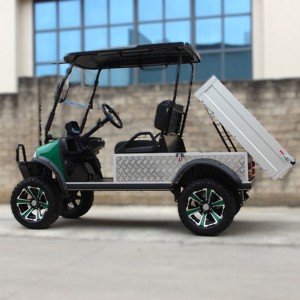
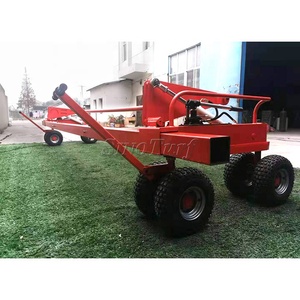
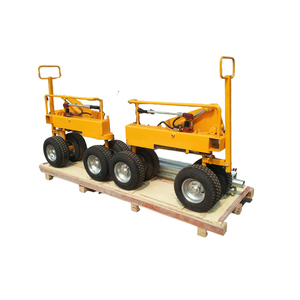
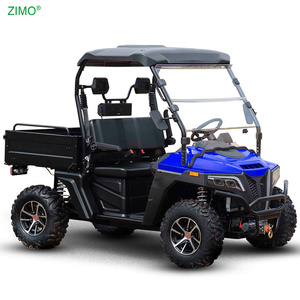
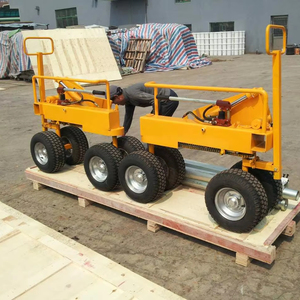
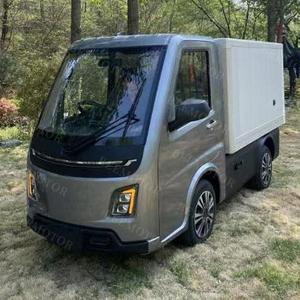
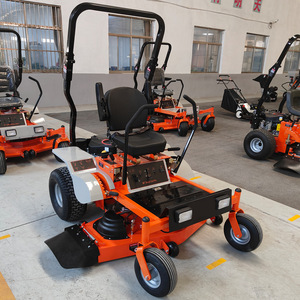
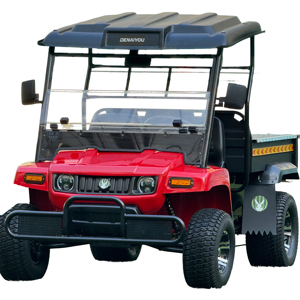
The rapid electrification of global commercial logistics, resort operations, municipal facility maintenance, and specialized athletic turf management has transformed the demand for zero-emission cargo carts. Modern enterprise procurement directors no longer search simply for standard motorized carts; they require heavy-duty electric utility vehicles (UTVs), automated turf laying carriers, and street-legal low-speed cargo vehicles (LSVs) engineered with structural galvanization, advanced Lithium Iron Phosphate (LiFePO4) energy systems, and intelligent AC brushless drivetrains.
As a leading OEM and ODM manufacturer operating over 18,000 square meters of specialized production space, our engineering team continuously benchmark the global supply chain. In evaluating the Top 10 Cargo Cart Manufacturer & Factory landscape, global buyers must assess not only cosmetic assembly, but critical mechanical structural integrity, dynamic weight distribution, payload-to-power ratios, and international compliance standard homologations such as CE, DOT, FMVSS 500, and UN38.3 battery certifications.
A direct technical comparison highlighting why industrial cargo platforms outperform modified personal transportation vehicles in heavy-duty commercial applications.
| Engineering Dimension | Industrial Grade Cargo Carts (Factory OEM) | Standard Commercial Golf Carts | Operational Impact & Information Gain |
|---|---|---|---|
| Chassis Structural Rating | Hot-dip galvanised steel, 5,000km torture-tested | Stamped steel or light aluminum ladder frame | Prevents frame distortion under 500kg+ dynamic cargo payloads on uneven terrain. |
| Powertrain Technology | 5kW - 7.5kW AC Induction Motor w/ Regen Braking | 3.7kW DC Brushed Motor | Delivers flat-torque response on 30% inclines without brush degradation or heat fade. |
| Battery Chemistry & BMS | LiFePO4 with CAN-bus thermal cell balancing | Flooded Lead-Acid (Deep Cycle) | Eliminates terminal maintenance, reduces pack weight by 60%, and offers 3,500+ charge cycles. |
| Braking Architecture | 4-Wheel Hydraulic Disc Brakes + Auto Electro-Brake | Rear Mechanical Drum Brakes | Cuts loaded stopping distance by 45% on slippery grass, gravel, and incline descents. |
| Specialized Hydraulics | Electric hydraulic tilt beds & grass roll tension lifts | Manual tilt levers or fixed beds | Reduces physical operator fatigue and mechanizes turf spreading and cargo unloading. |
When selecting a manufacturing partner, global fleet procurement officers should evaluate these five mandatory industrial capabilities.
Top-tier factories do not rely on off-the-shelf golf cart frames. They design specialized long-wheelbase platforms with reinforced cross-members, heavy-duty rear leaf or coil-over suspensions, and high ground clearance tailored for specialized equipment, turf rollers, and high-capacity dump beds.
Integrating high-efficiency 48V or 72V AC drivetrains with programmable motor controllers (such as Curtis or Toyota platforms) allows precise torque mapping. This guarantees high pull torque at low speeds while maintaining efficient high-speed cruising across commercial campuses.
For athletic fields and turf laying projects, top manufacturers design purpose-built attachments: hydraulic roll lifters, mechanical grass spreaders, zero-turn lawn trimmers, and motorized hydraulic deposit dump boxes that transform utility vehicles into multi-functional workhorses.
Cargo carts operated near coastal resorts, turf fertilizers, or winter salt conditions demand marine-grade protection. Leading manufacturers utilize electrophoretic coating (E-coating) combined with 480-hour salt-spray tested powder finishes to guarantee zero rust penetration.
A legitimate factory standard includes complete technical file validation: CE directives for machinery, DOT FMVSS 500 compliance for low-speed vehicles, ISO 9001 quality management, and international shipping clearance for dangerous lithium goods (UN38.3 & MSDS certification).
Global fleet longevity requires reliable parts backup. Premier factories supply exploded schematic diagrams, pre-packaged fast-moving wear kits (brake pads, bushings, solenoids), and remote technician training to eliminate long maintenance downtime.
Understanding where cargo cart manufacturing is heading over the next decade allows procurement managers to future-proof their investments.
Modern enterprise cargo fleets are rapidly adopting IoT telematics modules. Next-generation cargo carts broadcast real-time state-of-charge (SoC), thermal cell diagnostics, GPS location tracking, and operational hours directly to centralized facility management dashboards. Predictive maintenance algorithms alert engineers before component failure occurs.
The industry is moving away from fixed single-purpose beds toward modular frame mounting systems. Facilities can convert a single base chassis from a 2-seat pick-up cargo bed into a turf roll lifting device, an artificial grass spreader, or a multi-passenger shuttle within 15 minutes using quick-release hydraulic couplings and lock-pins.
To extend field operation times without returning to charging bays, utility carts are integrating high-efficiency flexible roof solar panels capable of adding 15-20% daily range. Simultaneously, transition to 72V and 96V LiFePO4 battery architectures decreases current draw, reduces motor heating, and improves hill-climb endurance under heavy cargo loads.
For massive agricultural operations, golf courses, and school athletic field installations, cargo vehicles are incorporating drive-by-wire steering actuators. This enables semi-autonomous turf laying and precision grass roll transport along pre-mapped GPS coordinates, minimizing labor costs and dramatically speeding up field construction.
With over a decade of electric vehicle manufacturing experience, our integrated facility provides institutional buyers with end-to-end customization, certified safety, and unmatched manufacturing control.
We control the full production lifecycle: structural tube bending, robotic chassis welding, automated powder coating, wiring harness fabrication, and dynamic load testing. In-house control means design changes do not suffer third-party delays.
Every cargo vehicle passing through our assembly lines undergoes a rigorous 100-point physical inspection, including rain simulation water-tightness tests, 30% incline torque testing, 4-wheel brake calibration, and high-voltage insulation monitoring.
Our packaging engineering optimizes 40HQ container space, accommodating up to 8–10 units securely with specialized protective steel frames. We provide full export documentation including UN38.3, MSDS, CE, and VIN compliance plates for smooth customs clearance.
Detailed technical answers addressing common procurement inquiries regarding cargo carts, turf machinery, and OEM customized production.
Our standard commercial utility carts feature payload capacities ranging from 400 kg up to 1,000 kg depending on chassis length and suspension configuration. Heavy-duty models equipped with 7.5kW AC motors support towing loads of up to 1,500 kg, making them ideal for equipment transport and turf installation projects.
LiFePO4 (Lithium Iron Phosphate) delivers 3,500+ charge cycles compared to 500-800 cycles from lead-acid. Lithium batteries weigh 60% less (improving payload capacity), require zero watering maintenance, charge rapidly within 3-5 hours, and maintain constant voltage output throughout the entire discharge cycle without torque drop on inclines.
Yes. We specialize in custom ODM engineering for athletic field tools. We supply customized roll lifting, transporting, and turf spreading attachments mounted on reinforced 4-wheel drive or heavy-duty chassis to streamline playground and stadium grass installations.
We issue full export documentation, including CE directives for machinery safety, UN38.3 and MSDS testing reports for lithium battery transport safety, 17-digit VIN identification plates, factory Certificate of Conformity (CoC), and detailed exploded parts manuals for after-sales servicing.
We offer comprehensive OEM programs. Global dealers and corporate fleet clients can specify custom body panel colors (RAL / Pantone matching), custom polyurethane seat stitching, branded steering wheel inserts, customized front grille badges, and modified dashboard graphics.
For standard electric utility and cargo cart models, standard factory lead time is 20–30 days. Custom ODM engineering projects or specialized attachments require 35–45 days. Flexible MOQ options are available, ranging from sample evaluation units to full 40HQ container loads.
Consult with our lead engineering team to review technical specifications, request container pricing, or customize specialized cargo vehicles for your facility needs.
