Explore our export-certified DC fast charging hardware, smart commercial stations, and high-output automotive charging modules built for global deployment.
As the global automotive landscape accelerates towards full electrification, charging infrastructure has expanded far beyond simple energy replenishment. Modern electric vehicle fleets, commercial highway service hubs, passenger vehicle modifications, and municipal transit networks demand highly reliable, intelligent, and scalable charging systems. As a premier **China Fast Charger Supplier & Exporter**, our manufacturing group bridges high-efficiency power electronics with field-tested thermal management and smart grid communication protocols.
Modern fast-charging systems encompass two distinct yet interconnected market demands: **High-Power DC Fast Charging Stations (60kW to 360kW+)** engineered for rapid highway replenishment and commercial fleet operators, and **Sub-system Automotive Quick-Charge Modules (12V-24V DC to QC3.0/PD)** designed for vehicle modification, in-cabin power delivery, and low-voltage auxiliary systems. Achieving operational resilience across both sectors requires deep expertise in Silicon Carbide (SiC) semiconductors, dynamic load distribution, and multi-protocol compliance (OCPP 1.6J/2.0.1, CCS1, CCS2, NACS, and GBT).
Information Gain Metric: High-power charging stability relies on thermal containment and power module efficiency. Our latest generation of 30kW/40kW liquid-cooled and forced-air power conversion modules achieves peak operating efficiencies exceeding 96.5%, significantly reducing localized thermal stress and lifecycle hardware degradation by up to 40% compared to legacy IGBT topologies.
Delivering high information gain for procurement officers, infrastructure developers, and OEM fleet managers.
Utilizing high-frequency Silicon Carbide MOSFET power conversion matrices. Delivers lower switching losses, higher voltage thresholds (up to 1000V DC), and superior power density per rack unit.
Enclosures are fabricated from hot-dip galvanized steel or aircraft-grade aluminium with powder coatings validated under 480-hour salt spray protocols for harsh coastal and industrial environments.
Native integration with open charge point protocols and Plug & Charge (ISO 15118) encryption, supporting automated billing, remote diagnostics, and grid-responsive V2G dynamic balancing.
Active liquid-cooling technology within CCS2 and NACS charging guns allowing continuous current throughput up to 500A without exceeding safe thermal thresholds or increasing cable weight.
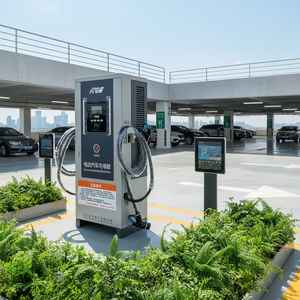
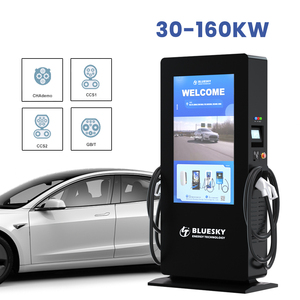
Integrated high-brightness outdoor digital displays on commercial chargers (such as our 60kW-120kW units), generating secondary ad revenue streams for charge point operators (CPOs).
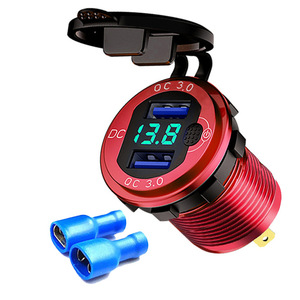
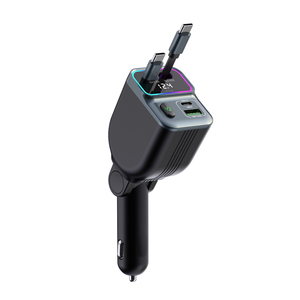
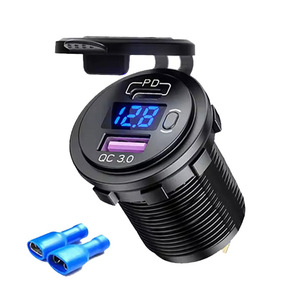
Low-voltage DC-DC converters for automotive modifications featuring real-time LED digital voltage monitoring, intelligent IC switching, and aluminum heat-sink enclosures.
Selecting the optimal fast-charging hardware requires analyzing grid capacity, voltage range, vehicle battery chemistry, and expected daily duty cycles. Below is a engineering overview across our core commercial and automotive charging platforms:
| Charger Category | Power Output / Range | Input Voltage | Connector Standards | Key OEM / CPO Features |
|---|---|---|---|---|
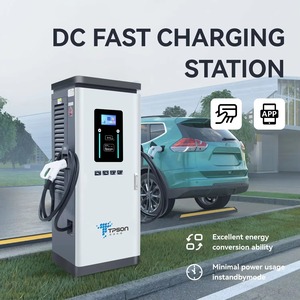
| Commercial Ultra-Fast DC | 120kW – 360kW Continuous | 3-Phase 380V / 480V AC | CCS1 / CCS2 / NACS / GBT | OCPP 2.0.1 Dynamic Load Sharing, APP Payment, Liquid Cooling |
| Commercial Compact DC | 60kW – 80kW Modular | 3-Phase 380V AC ±15% | Dual-Gun Multi-Standard | Multimedia 55-Inch Ad Screen, IP54 Outdoor Rated, RFID Card |
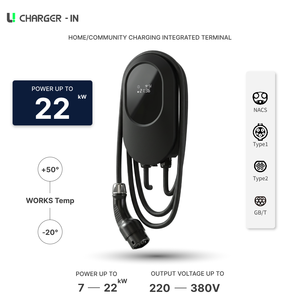
| Destination Fast AC/DC | 7kW / 11kW / 21kW / 30kW | 1-Phase 230V / 3-Phase 400V | Type 2 / Type 1 / GBT | Compact Wallbox Smart Home Integration, Solar Matching, App Control |
| Automotive Auxiliary Quick-Charge | QC3.0 + PD 30W-65W | 12V – 24V DC Universal | Dual USB-C / USB-A Ports | Vehicle Modification Real-time Voltmeter, Aluminium Shell, Waterproof Switch |
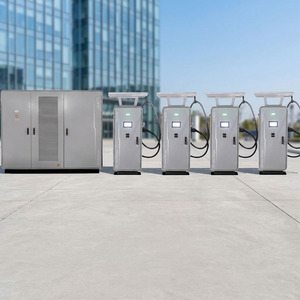
| Commercial Multi-Port DC Solution | 380V DC (3/5 Output Ports) | 380V DC Bus Architecture | National Standard GBT / Custom | Fleet Depot Central Power Cabinet with Distributed Dispenser Satellites |
As global buyers evaluate Chinese manufacturing partners, several macro-technological shifts are altering procurement specifications for EVSE (Electric Vehicle Supply Equipment) and automotive charging electronics:
Leading EV original equipment manufacturers (OEMs) are transitioning vehicle platforms from traditional 400V battery architectures to 800V and 1000V systems (such as Porsche Taycan, Hyundai E-GMP, and BYD e-Platform 3.0). To support 10-to-80% state-of-charge (SoC) replenish times under 15 minutes, commercial chargers must maintain wide constant-power output bands from 200V DC up to 1000V DC. Sourcing units equipped with wide-voltage SiC power modules ensures future-proof utility against next-generation EV passenger cars and commercial heavy-duty trucks.
Charge Point Operators (CPOs) are shifting from purely energy-resale monetization models to high-engagement commercial media hubs. Stations fitted with high-brightness, weatherproof 55-inch multimedia screens allow operators to run localized advertising networks, offsetting land lease and grid connection costs while drivers pause for 15–30 minute rapid charges.
Grid capacity constraints represent the single largest bottleneck in highway fast-charger deployment. Future-ready procurement strategies focus on chargers capable of dynamic power distribution across multiple guns, as well as seamless integration with stationary Battery Energy Storage Systems (BESS) and microgrid solar installations to buffer peak demand spikes.
With North American and European markets standardizing around NACS (Tesla standard) and CCS2 plug geometries alongside Plug & Charge (ISO 15118) auto-authentication, global exporters must supply hardware platforms certified across multiple international safety standards (CE, UL, TUV, and UN38.3 compliance protocols).
Expert insights addressing key commercial, technical, and logistical considerations for fast charger procurement.
AC chargers (typically 3.7kW to 22kW) supply alternating current directly to the vehicle's onboard converter (OBC), which then converts AC to DC to fill the battery pack. DC Fast Chargers (60kW to 360kW+) bypass the vehicle's onboard converter and supply high-voltage direct current directly to the battery traction pack via heavy-gauge cables. This allows DC stations to deliver up to 20 times more energy per minute, reducing charging times from hours to minutes.
Dynamic Load Management monitors total electrical building consumption in real time and automatically throttles charger output when total demand nears grid transformer limits. In multi-gun DC stations (such as 120kW split-dispenser models), the internal matrix switches power modules dynamically between guns based on each vehicle's requested charge curve, maximizing asset utilization without over-subscribing electrical infrastructure.
Silicon Carbide (SiC) semiconductors possess a wider bandgap than standard Silicon IGBTs. This allows power modules to operate at substantially higher switching frequencies, cut heat loss by up to 50%, reduce module physical dimensions, and maintain efficiencies above 96.5%. For station owners, this translates into lower electricity standby losses, reduced cooling expenses, and prolonged equipment operational lifespan.
Commercial DC charging stations intended for export must satisfy regional compliance regimes. European markets require CE marking, Low Voltage Directive (LVD), Electromagnetic Compatibility (EMC), and RED compliance. North American deployments require UL / ETL standards (UL 2202 / UL 2594), while battery components or integrated battery storage require UN38.3 and MSDS export documentation. Our engineering team provides full technical dossiers for local utility interconnect approval.
Yes. All commercial fast chargers support open communication via OCPP 1.6J and OCPP 2.0.1. CPOs and fleet operations can easily bind our hardware to any compliant cloud management platform (such as ChargePoint, Greenflux, AMPECO, or custom server infrastructure). We offer complete white-labeling including customized silk-screen branding, custom powder-coat casing colors, tailored UI display assets, and branded packaging.
Standard model orders ship within 20 to 30 business days. Custom ODM development (including custom enclosure tooling or specialized electrical layouts) ranges from 35 to 45 days. Equipment is packed in export-grade reinforced wooden cases with anti-vibration padding. A standard 40HQ container can accommodate up to 12-16 floor-standing DC stations depending on height and screen specifications.
Whether you require high-power highway commercial stations, municipal fleet depots, or custom low-voltage automotive quick-charge adapters, our engineering team is ready to deliver certified, high-performance energy solutions tailored to your operational specifications.
Send an Inquiry