Explore our premium lineup of high-efficiency electric carts, campus movers, and precision turf laying tools built for global operators and commercial dealers.
An authoritative breakdown of global procurement dynamics, structural engineering standards, and the technological pivot toward automotive-grade electric architectures.
The global low-speed vehicle (LSV) and specialized commercial turf cart market is undergoing a fundamental structural transition. Driven by stringent zero-emission directives across hospitality management, municipal facility maintenance, and luxury residential developments, procurement heads are aggressively replacing traditional internal combustion engine (ICE) utility fleets with high-efficiency electric mobility platforms. China has emerged as the global epicenter for luxury electric cart and precision turf equipment manufacturing, moving beyond simple assembly to spearhead advanced powertrain integration, lightweight automotive metallurgy, and intelligent telemetry.
As a leading premier manufacturer and global exporter, MAC EV operates at the nexus of luxury passenger transport and heavy-duty utility engineering. Achieving true commercial utility requires balancing passenger comfort, chassis torsional rigidity, dynamic payload capacity, and long-term operating efficiency. Where standard golf carts suffer structural degradation under continuous 400 kg+ payloads or high-salinity coastal operating environments, premium Chinese OEM manufacturing now mandates robotically welded box-section steel frames, e-coated multi-stage corrosion protection, and integrated AC induction or Permanent Magnet Synchronous Motor (PMSM) drivetrains.
Heavy-duty ladder chassis engineered with high-yield automotive steel, subject to finite element analysis (FEA) to withstand severe dynamic payload stress across uneven terrain.
High-torque 5kW to 7.5kW AC induction motors equipped with regenerative downhill braking, elimination of motor brush maintenance, and 25% greater thermal headroom.
Transitioning from legacy lead-acid to integrated Lithium Iron Phosphate (LiFePO4) power plants featuring smart CAN-bus BMS communication for zero maintenance and extended cycle life.
Deep expertise derived from over a decade of vertically integrated electric vehicle production and rigorous export validation.
Our state-of-the-art industrial park houses complete full-process production lines: precision CNC tube bending, automated robotic chassis welding, multi-stage electrostatic powder coating, electronic harness assembly, marine-grade upholstery crafting, and strict end-of-line dynamic performance calibration. By keeping critical manufacturing processes strictly in-house, we eliminate multi-tier supplier markups, guarantee stringent component traceability, and streamline custom OEM/ODM modifications for global dealers.
To support deployment in demanding environments—such as oceanfront resort properties, tropical island shuttles, and heavily salted winter municipal roads—every structural component undergoes a rigorous 480-hour neutral salt spray corrosion benchmark. Furthermore, newly developed platform prototypes complete a rigorous 5,000 km continuous full-load endurance test over accelerated surface obstacle tracks to validate suspension, steering linkage, and brake system longevity prior to serial production.
Exporting to over 45 international markets demands uncompromising adherence to localized regulatory frameworks. MAC EV vehicles are produced under strict ISO9001 quality management systems. Our passenger carts and street legal LSVs comply with DOT (Department of Transportation) FMVSS 500 guidelines, complete with 17-digit VIN assignments, laminated safety glass windshields, and 3-point seatbelt assemblies. Lithium battery configurations fully satisfy UN38.3 transport safety requirements and MSDS documentation for seamless ocean freight logistics.
We empower our global distributor network with comprehensive technical collateral, including exploded schematic parts catalogues, wiring harness pinout diagrams, diagnostic software tools, and technician video modules. Furthermore, we maintain a dedicated fast-moving spare parts central inventory, ensuring rapid replacement dispatch to minimize client operational downtime.
Key strategic shifts reshaping how commercial fleet managers, resort developers, and agricultural turf contractors select utility vehicles.
Legacy flooded lead-acid batteries are rapidly being phased out due to high maintenance costs (acid topping, terminal cleaning), heavy curb weight, thermal runaway risks, and short operational life (500–800 cycles). Modern commercial buyers exclusively mandate standard LiFePO4 packs delivering 2,000 to 3,500 full depth-of-discharge cycles, fast 2-hour opportunity charging capability, and a 60% reduction in battery pack mass, significantly improving energy efficiency and payload headroom.
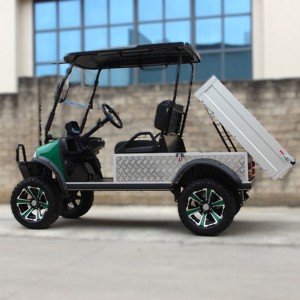
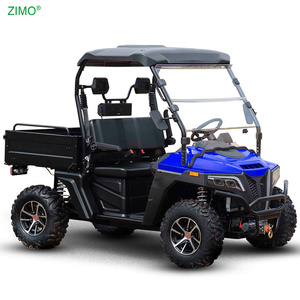
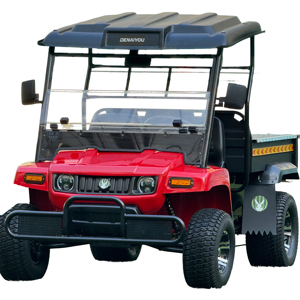
Procurement directors are shifting away from single-duty specialized carts toward modular utility platforms. A single heavy-duty chassis design can now be configured at the factory level as a 4-seater luxury resort tourer, a flatbed maintenance utility vehicle, an artificial turf roll transport device, or a hydraulic rear dump truck. This modularity streamlines fleet maintenance stocking and reduces total cost of ownership (TCO) across enterprise operations.
As gated communities, urban campuses, and municipal downtown zones integrate low-speed vehicles into public transport networks, the boundary between recreational golf carts and automotive LSVs has dissolved. Global buyers require factory-installed safety packages: 4-wheel hydraulic disc brakes, high-intensity LED turn signals, panoramic mirrors, street-legal DOT windshields, rear backup cameras, and governed top speeds of 20 to 25 mph (32–40 km/h).
Enterprise procurement now demands real-time operational visibility. Modern luxury carts and commercial turf utility vehicles are increasingly equipped with 4G/GPS telematic hardware. Operational managers can track vehicle location, monitor real-time battery state-of-charge (SOC), establish geofencing perimeters for rental units, and receive automated maintenance alert notifications directly from the vehicle’s central electronic control unit (ECU).
A rigorous engineering comparison highlighting structural, mechanical, and electrical distinctions in commercial grade performance.
| Specification Parameter | Standard Market Golf Cart | MAC EV Luxury Passenger LSV | MAC EV Heavy-Duty Turf Utility |
|---|---|---|---|
| Chassis Construction | Stamped steel / light channel frame | Hot-dip galvanised ladder box chassis | Reinforced high-yield structural steel |
| Motor Drivetrain | 3.5 kW DC series motor | 5.0 kW AC motor with regen braking | 7.5 kW AC motor with high torque gear head |
| Battery Technology | 6V/8V Lead-acid flooded cells | 48V / 105Ah Smart LiFePO4 + BMS | 48V / 150Ah High-Output LiFePO4 |
| Brake System | Rear mechanical drum brakes | 4-Wheel hydraulic disc brakes | Heavy-duty 4-wheel dual-circuit hydraulic disc |
| Front Suspension | Leaf spring or rigid axle | Independent double A-arm coil-over | Heavy-duty coil-over with hydraulic dampening |
| Payload / Cargo Capacity | 250 kg max capacity | 400 kg payload rating | 700 kg heavy-duty haul rating |
| Corrosion Protection | Basic primer coat spray | Automotive electro-coating (E-coat) + powder | 480-Hr salt-spray certified anti-rust coating |
| Compliance Level | Unregulated golf course use only | DOT / FMVSS 500 LSV street legal certified | CE certified facility & campus compliant |
Addressing critical procurement, compliance, shipping, and customization parameters for international commercial buyers.
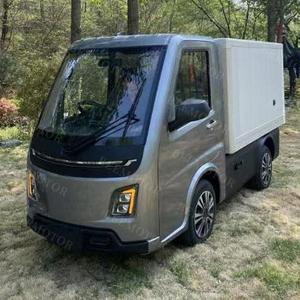
A standard golf cart is designed purely for private property or low-speed golf course fairways, generally restricted to a maximum speed of 15 mph (24 km/h) without mandatory automotive safety equipment. In contrast, a street legal LSV is a legally defined motor vehicle class capable of speeds up to 25 mph (40 km/h) and authorized to operate on public roads with speed limits up to 35 mph. LSVs require mandatory safety features: 17-digit VIN plate, DOT-approved laminated safety glass windshield, 3-point seatbelts, headlamps, tail lamps, brake lamps, LED turn signals, exterior rearview mirrors, parking brake, and 4-wheel hydraulic disc braking systems. MAC EV manufactures fully certified LSV platforms ready for immediate vehicle licensing in export markets.
Lithium Iron Phosphate (LiFePO4) battery systems deliver significant long-term total cost of ownership (TCO) savings despite a higher initial capital expenditure. LiFePO4 batteries offer 2,000 to 3,500 complete discharge cycles compared to just 500 to 800 cycles for lead-acid batteries, effectively lasting 4 to 5 times longer. Additionally, LiFePO4 packs weigh approximately 60% less, reducing overall vehicle energy consumption and tire wear. They require zero maintenance (no distilled water topping or acid corrosion clean-up), maintain constant voltage throughout the discharge cycle without performance sag on steep slopes, and support rapid opportunity charging during shift breaks without memory degradation.
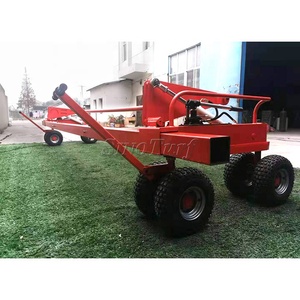
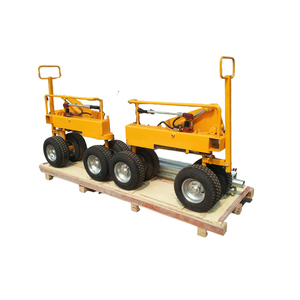
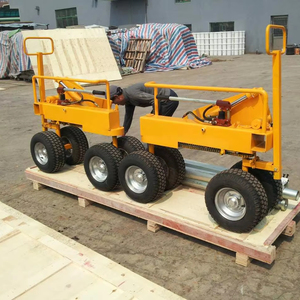
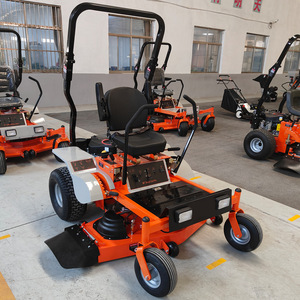
Yes. Beyond luxury passenger carts, MAC EV specializes in heavy-duty commercial utility modifications. Our specialized turf vehicles—such as artificial grass roll lifters, spreading machines, and campus dump trucks—feature custom hydraulic power units, reinforced sub-frames, heavy-duty rear drive transaxles, and high-flotation turf tires engineered to distribute weight evenly without tearing delicate real grass or damaging synthetic playground underlayment.
We provide full turn-key OEM/ODM customization options for qualified dealers and fleet buyers. Custom options include bespoke automotive body color paint matches, two-tone hand-stitched marine vinyl seating, custom alloy wheel designs, custom dashboard instrumentation interfaces, custom gear ratio settings for high-altitude environments, integrated sound bars, branding embroidery, and unique serializing. Minimum order quantities (MOQs) apply for deep structural frame modifications, while cosmetic private labeling is available for container-level orders.
All vehicles ship with complete international commercial documentation, including Certificate of Origin, Bill of Lading, Commercial Invoice, Packing List, CE Certificates, and UN38.3 + MSDS safety reports for lithium battery transport. To optimize sea freight costs, our engineers design modular roof structures and quick-release windshield assemblies, enabling standard 40-foot High Cube (40HQ) ocean containers to comfortably accommodate 8 to 10 passenger vehicles or specialized utility units without risking transit damage.
MAC EV provides a comprehensive international factory warranty: 3 years on LiFePO4 battery packs, 2 years on the main motor drivetrain controller assembly, and 3 years on the structural chassis frame. In the event of a warranty claim, our engineering desk evaluates diagnostic log files remotely and dispatches replacement components via expedited air freight. We also supply dealers with detailed diagnostic service tools, wiring manuals, and spare parts starter kits alongside initial container shipments.
Ready to upgrade your resort fleet, expand your dealership inventory, or acquire heavy-duty commercial turf equipment? Speak directly with our global export engineering desk today.
