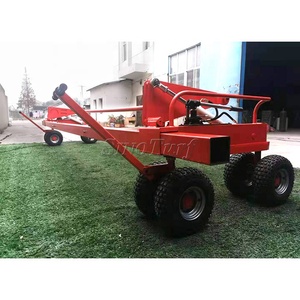
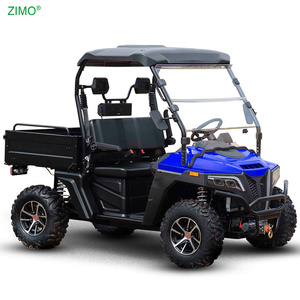
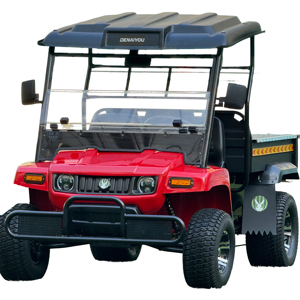
High-efficiency electric fleet vehicles & specialized turf machinery equipped with industrial-grade onboard battery charging technology optimized for Australian operational standards.
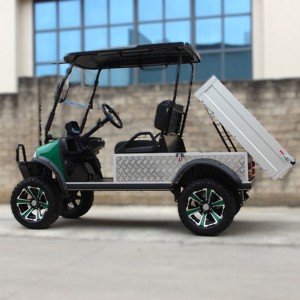
As Greater Sydney and New South Wales accelerate toward ambitious Net Zero targets, commercial fleet electrification, municipal landscaping, golf course maintenance, and industrial logistics across regional hubs like Parramatta, Port Botany, and Western Sydney Aerotropolis are undergoing a massive technical shift. At the heart of every high-performance electric utility vehicle, turf spreader, LSV, and commercial loader lies a critical component that governs operational uptime: the Onboard Charger (OBC).
An Onboard Charger converts alternating current (AC) from the single-phase or three-phase local power grid into regulated direct current (DC) required to charge high-density LiFePO4 or lead-acid traction battery packs. In coastal urban centers like Sydney, where environmental conditions vary from corrosive salt sea spray along Port Jackson to scorching 45°C summer heatwaves in Penrith and Western Sydney, standard off-the-shelf power converters fail prematurely. Original Equipment Manufacturers (OEMs) and commercial fleet managers require ruggedized, thermal-resilient, and CAN-bus integrated charging units engineered specifically to withstand local operational demands.
Operating an electric fleet across Sydney requires adherence to AS/NZS 3000:2018 (Wiring Rules) and AS/NZS 61000 EMC emissions. Integrating high-efficiency Power Factor Correction (PFC > 0.99) inside onboard power electronics minimizes reactive power losses, prevents phase imbalances, and lowers total cost of ownership (TCO) by reducing maximum demand charges from local network providers like Endeavour Energy and Ausgrid.
Detailed architecture engineered for seamless powertrain integration, extreme durability, and maximum grid conversion efficiency.
Incorporates interleaved APFC topologies yielding a power factor above 0.99 and Total Harmonic Distortion (THD) under 5%. Complies fully with Australian mains standards (230V/400V 50Hz) to safeguard local transformer infrastructure.
Real-time bidirectional data telemetry allows dynamic handshake with the vehicle Battery Management System (BMS). Automates charge profiles (CC/CV/Trickle) while transmitting temperature, cell balance, and fault status.
Fully encapsulated in die-cast aluminum enclosures with thermally conductive epoxy potting. Rated IP67/IP68 for complete protection against high-pressure water jets, mud immersion, and saline coastal atmospheric dust.
Utilizes high-frequency LLC resonant converters with SiC (Silicon Carbide) MOSFET switches. Enables compact power density exceeding 2.2 kW/L while maintaining energy conversion efficiency above 96.5%.
Custom passive cooling fins combined with automated thermal derating circuits ensure full-load operation up to 65°C ambient temperatures without catastrophic component breakdown or thermal runaway.
Designed to meet RCM (Regulatory Compliance Mark), CE, UL2202, and IEC 61851 safety standards. Features hardware over-voltage, short-circuit, reverse polarity, and over-temperature safety cutoffs.
Understanding user intent and operational environments is key to selecting the appropriate onboard charging topology. In New South Wales, commercial electric vehicles operate across distinct harsh micro-environments:
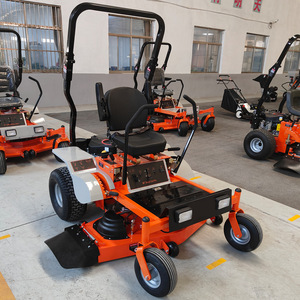
Sydney's premier golf clubs across the Northern Beaches, Eastern Suburbs, and Sutherland Shire rely on quiet, zero-emission utility vehicles, zero-turn turf trimmers, and artificial grass spreaders. These machines undergo frequent micro-charging cycles during operator breaks. Onboard chargers integrated directly onto vehicles like the HDK Turfman 700 or Electric Turf Utility Commercial Cart enable operators to plug into any standard 10A or 15A Australian wall socket without carrying bulky external charging bricks.
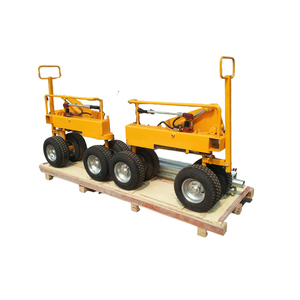
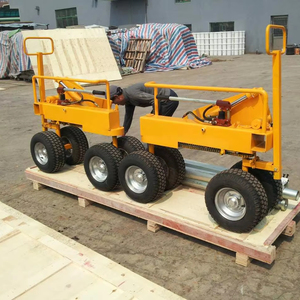
Heavy machinery such as Artificial Grass Roll Lifting and Laying Machines demand robust high-voltage DC chargers (48V to 96V systems) capable of sustaining high vibration loads. Specialized off-road equipment working on dusty, unpaved surfaces requires fully potted chargers that resist mechanical shocks, dust ingress, and constant movement over rough terrain.
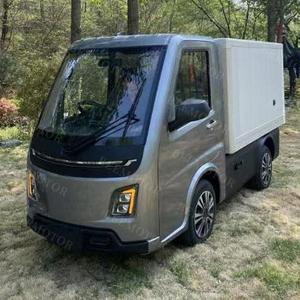
Logistics centers around Blacktown, Parramatta, and Badgerys Creek utilize large fleets of 4-wheel drive farm utility carts and electric dump trucks. Continuous multi-shift operational cycles mandate fast DC charging curves, thermal stability under metal carports during summer, and automatic wake-up features governed by intelligent CAN-bus handshakes.
Vehicles deployed around Sydney Harbour, Darling Harbour, and coastal boardwalks face constant airborne salt fog. Marine-grade anodized aluminum charger housings combined with stainless steel fasteners and IP67 sealed connectors prevent galvanic corrosion and electrical tracking faults.
Compare standard industrial parameters for Sydney commercial vehicle manufacturers and fleet retrofit engineers.
| Parameter Specification | 1.5kW Fleet Standard | 3.3kW Commercial Grade | 6.6kW Fast-Charge Heavy Duty |
|---|---|---|---|
| Nominal Output Voltage | 48V / 60V / 72V DC | 48V / 72V / 96V / 108V DC | 96V / 144V / 312V / 400V DC |
| Input Voltage Range | 85V – 265V AC (Single Phase) | 85V – 265V AC (Single Phase) | 180V – 450V AC (1-Phase / 3-Phase) |
| Power Factor (PFC) | ≥ 0.98 @ Full Load | ≥ 0.99 @ Full Load | ≥ 0.99 @ Full Load |
| Peak Efficiency | 94.5% | 96.0% | 96.8% |
| Communication Interface | CAN 2.0B / RS485 | CAN 2.0B / Enable Wire | Isolated CAN 2.0B / SAE J1939 |
| Ingress Protection | IP66 Aluminum Sealed | IP67 Sealed Potting | IP67 / IP68 Liquid Cooled Option |
| Target Application | Golf Carts, Light Turf Utility | Heavy Utility Carts, Spreading Machinery | 4WD Dump Trucks, Commercial Transport |
Selecting an OEM/ODM partner for onboard chargers in Sydney requires verifiable proof of quality control, electrical testing, and manufacturing scalability. Our integrated electric vehicle and power electronics production facilities represent state-of-the-art engineering leadership:
Direct technical answers addressing regulatory compliance, thermal performance, and purchasing terms for Australian procurement teams.
Yes. Our onboard chargers are engineered for single-phase 230V (50Hz) and 3-phase 400V Australian grid compliance. Power electronics include built-in surge protection, anti-islanding isolation, and electromagnetic compatibility filtering aligned with AS/NZS 61000 standards to ensure smooth approval by local energy providers across New South Wales.
Our chargers utilize high-efficiency Silicon Carbide (SiC) power switches that reduce thermal losses by up to 40%. Encapsulated in heavy-duty aluminum heatsinks with thermal-conductive epoxy, the internal temperature monitoring dynamically scales output current during extreme heatwaves (above 45°C ambient) to protect battery packs without dropping connection.
Absolute flexibility is provided via programmable CAN 2.0B interfaces. We pre-program factory-preset Constant Current / Constant Voltage (CC/CV) profiles matching your specific battery supplier's BMS instructions, including low-temperature charge cutoffs and cell balance trickle modes.
An onboard charger eliminates the requirement to store external charging units inside maintenance sheds or cargo beds. Drivers can simply plug any standard Australian extension cord directly into the vehicle's recessed inlet port anywhere on site, vastly improving fleet utility, operator convenience, and operational freedom.
Standard unit configurations are dispatched in container quantities (40HQ) or air freighted for prototype evaluation within 15–25 business days. Full custom OEM casing and firmware programs typically take 35–45 days. Complete spare-parts catalogs, wiring schematics, and direct technical support are provided to Australian engineering teams.